
Singapore – Zendesk has introduced an AI platform that connects customer and employee service workflows with business outcomes, alongside a pricing model that moves away from traditional per-seat fees.
Announced on 11 November, the platform brings together AI assistants, specialised agents and tools designed to help organisations manage service interactions across different systems. Its capabilities include connecting external AI tools to service workflows, helping personal AI assistants locate verified support channels, and identifying recurring problems that teams can address.
The launch comes as consumers increasingly turn to AI assistants for everyday tasks. Zendesk cited its global research, which found that 52% of consumers are comfortable relying on personal AI assistants for such tasks, while 63% believe companies will need to redesign customer service to accommodate them. However, 84% said human assistance should always remain available.
The platform includes four main capabilities: an open directory that helps AI assistants locate verified customer support channels; a connection layer for external AI tools and agents; specialised AI agents for complex customer and employee tasks; and tools designed to help service teams identify and resolve underlying problems.
“People don’t think about which channels, systems, or departments they need to navigate to interact with an organisation. They simply want help to accomplish what they came to do,” said Tom Eggemeier, CEO of Zendesk.
“Outcome AI brings together the context and ability to act to help people reach the right outcome quickly, wherever their experience begins. It learns from each result and improves when it falls short. For organisations focused on loyalty and satisfaction, that’s the standard,” Eggemeier continued.
“As AI rapidly redefines enterprise service, APAC leaders navigating tightening cost pressures and increased scrutiny on ROI need clear proof of measurable business value,” said Bikram Mazumdar, Vice President of Zendesk Asia.
“By connecting across systems, extending capabilities into existing tools, and executing complex workflows, Zendesk’s Outcome AI Platform enables organisations to move past basic automation—directly linking AI investments to tangible business impact, enduring trust, and lasting customer loyalty,” Mazumdar continued.
Pricing tied to completed work
Under its new Zendesk Unlimited offering, the company is moving away from conventional seat-based software pricing. Organisations will instead set an outcome budget and pay for eligible issues resolved and business work completed.
The plans provide access to Zendesk AI, with available features varying by tier. The company said it evaluates outcomes for quality and completeness, allowing customers to track which activities count towards their budgets. Organisations can begin with a lower upfront investment and expand their usage as AI completes more work.
Zendesk said customers using the platform can automate up to 84% of service requests, reduce resolution times from hours to minutes and improve customer satisfaction scores.
“The evolution of Zendesk’s outcome-based pricing model reflects a shift in how enterprise buyers want to pay for AI,” says Tapan Patel, Research Director, Customer Data, Analytics, and Decisioning, at IDC.
“By tying AI investment directly to verified resolutions and business outcomes rather than traditional seat counts, Zendesk establishes a clear alignment between cost and realised value, providing a differentiator in the customer experience market,” Patel continued.
Connecting AI assistants to verified support channels
The Open Service Directory is an open specification and public directory designed to help AI assistants identify verified customer support channels. It is available to businesses regardless of whether they use Zendesk.
Organisations can register their support channels and determine what information they share, as well as when human review is required. The directory does not access private customer data or perform service actions.
The directory is intended to complement protocols that govern communication after an AI assistant connects to a service provider. Zendesk plans to adopt these protocols and is inviting customer experience platforms, AI agent developers and businesses to contribute to its development.
Early participants include Betterment, ElevenLabs, Flex, TeamSystem, TBA Auctions, Telekom Payment S.A. and Wireless Logic.
Extending service workflows to external AI tools
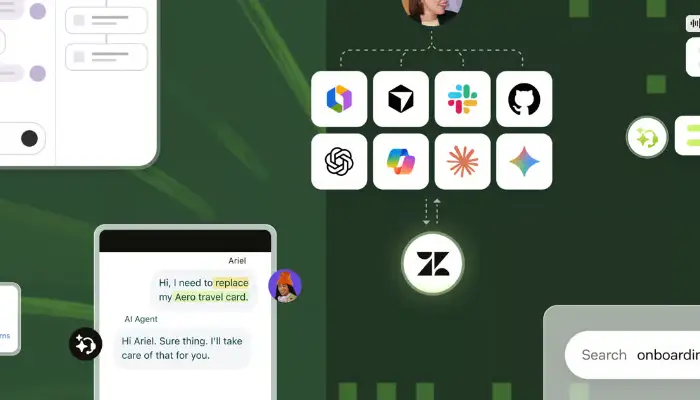
Zendesk Bridge allows organisations to connect external AI interfaces and agents to the company’s service context, workflows and actions without rebuilding existing processes or adopting a Zendesk-specific interface.
Administrators can determine which AI tools are permitted to connect, the information they can access and the actions they can perform. The platform applies identity checks, permissions, policies, human approvals, monitoring and audit controls to actions carried out through these connections.
The company also introduced tools intended to help service teams identify areas for improvement. These include specialised industry and custom agents, analytics capabilities for assessing performance, and an administrative assistant that recommends actions.
An AI agent development tool is also designed to help teams identify automation opportunities, build and test agents, and expand their deployment. Teams can use performance and quality measurements to assess whether changes reduce repeat contacts or improve service delivery.