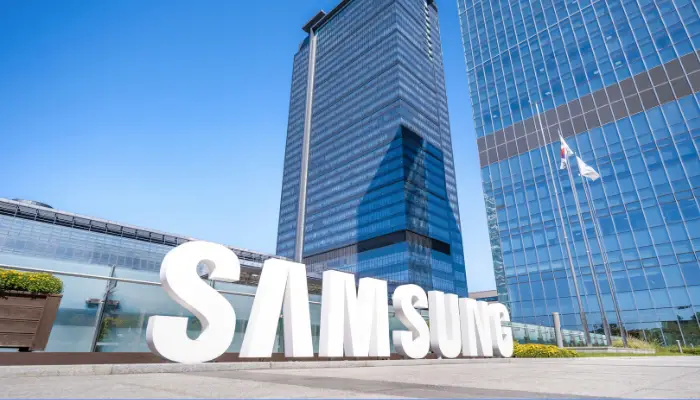


Seoul, South Korea – Healthcare AI company Heidi has signed a Memorandum of Understanding (MOU) with Samsung Medical Center (SMC) to develop a version of its platform tailored to South Korea’s healthcare environment.
Announced on 12 November, the collaboration will make SMC Heidi’s first clinical partner in South Korea and the initial site for validating its platform against local clinical, technical and regulatory requirements.
The organisations will explore integrating Heidi’s speech-to-text technology into DARWIN, SMC’s hospital information system, to support clinical documentation and daily workflows. The partnership will also involve a proof of concept using Heidi’s on-premises solution within the hospital’s infrastructure.
The deployment will connect with SMC’s electronic medical record (EMR) system using HL7 FHIR, a standard for exchanging healthcare information. Both parties will assess the platform’s technical performance, physician acceptance and documentation quality.
The collaboration also includes work towards developing a Korean clinical documentation standard, a Korean FHIR implementation guide and a reference architecture for the platform’s deployment in the country.
“Samsung Medical Center represents Heidi’s first collaboration in South Korea and will serve as a key partner as we expand into the Korean healthcare market,” said Thomas Kelly, Co-founder and CEO of Heidi.
“Korean clinicians are among the most skilled in the world, and they manage patient volumes few of their peers elsewhere would recognise. Every minute spent on documentation comes out of time with patients.
Working with SMC lets us build Heidi around the way medicine is practised in Korea, from its documentation standards to the hospital systems clinicians use every day, so the time we give back goes to patient care,” Kelly continued.
“We expect this collaboration with Heidi to further accelerate our efforts to create a more patient-centred AI-powered healthcare environment,” said Professor Seung Woo Park, President and CEO of Samsung Medical Center (SMC).
“This partnership will mark another important milestone for SMC as we continue to shape the future of smart hospitals by bringing the next generation of healthcare to life,” Park continued.
If the proof of concept is successful, SMC will become a reference site for potential deployments across other South Korean healthcare organisations. Heidi’s platform can be deployed either on-premises or through a cloud service, allowing hospitals to select an approach based on their infrastructure and data security requirements.
Beyond clinical documentation, Heidi is developing AI agents intended to support supervised clinical actions around patient visits. The two organisations will explore opportunities to extend their collaboration into these capabilities.