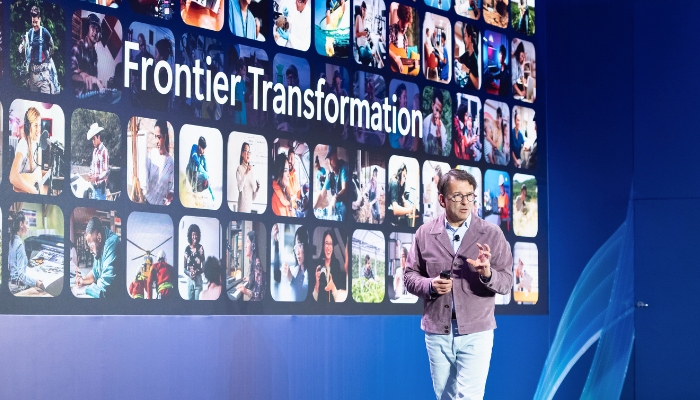


Singapore – Singapore’s workforce ranks among the world’s most active users of artificial intelligence (AI) in the workplace, according to new findings from Microsoft’s 2026 Work Trend Index, which point to both strong employee adoption and opportunities for organisations to better support AI-driven transformation.
The study found that 66% of AI users in Singapore said they were producing work they could not have created a year ago, compared with 58% globally. Among “Frontier Professionals,” a group identified as the most advanced AI users, the figure rose to 82%.
Microsoft said the findings indicate that employees are increasingly using AI to enhance decision-making, creativity and work outcomes. The report also found that 88% of AI users in Singapore said they remain responsible for the thinking behind their work when using AI, slightly above the global average of 86%. Critical thinking was identified as the most important skill for workers as AI becomes more integrated into the workplace, with 52% of respondents selecting it.
The report highlighted strong individual momentum in AI adoption. Around 78% of AI users in Singapore said they recognise the need to adapt quickly to AI, compared with 65% globally.
However, the research suggests that organisational structures may not be advancing at the same pace. Only 24% of respondents in Singapore said their leadership teams were clearly and consistently aligned on AI, slightly below the global benchmark of 26%. Meanwhile, 48% said their organisations tend to prioritise current goals rather than redesigning work processes around AI.
Microsoft described this gap as a “Transformation Paradox,” where employees are adopting AI faster than organisations are adapting systems, workflows and incentives to support long-term transformation.
Wee Luen Chia, Managing Director of Microsoft Singapore, said: “Singapore’s workforce is among the most AI-ready in the world, with employees already using AI to unlock new ways of working while keeping human judgment at the centre. The opportunity now is for organisations to reinforce that momentum with clearer leadership alignment, stronger managerial signals, and operating models designed for reinvention. When that happens, AI becomes a catalyst for better decisions and sustainable advantage.”
The report noted that organisational factors such as workplace culture, managerial support and talent development practices have a greater influence on AI impact than individual effort alone. According to Microsoft, these factors account for twice the reported impact of AI compared with individual contributions.
Singapore also ranked second globally in Microsoft’s AI Diffusion Index, reflecting the widespread adoption of AI across the workforce.
The findings suggest that the next phase of AI value creation will depend on how organisations integrate AI into workflows, decision-making processes and incentive structures.
Among Frontier Professionals, managerial support appeared to play a significant role. Compared with other employees, Frontier Professionals were more likely to report that their managers openly use AI (87% versus 72%), encourage experimentation (81% versus 63%), and promote more ambitious work redesign initiatives (82% versus 76%).
Microsoft said these workplace conditions help foster broader AI adoption and skill development, enabling more advanced and confident use of the technology.
The report concludes that Singapore’s workforce is entering the next stage of AI adoption with strong capabilities and a high level of responsible use. It suggests that organisations seeking long-term competitive advantages will need to move beyond adoption alone and focus on redesigning work structures, decision-making processes and learning systems to maximise AI’s potential.