
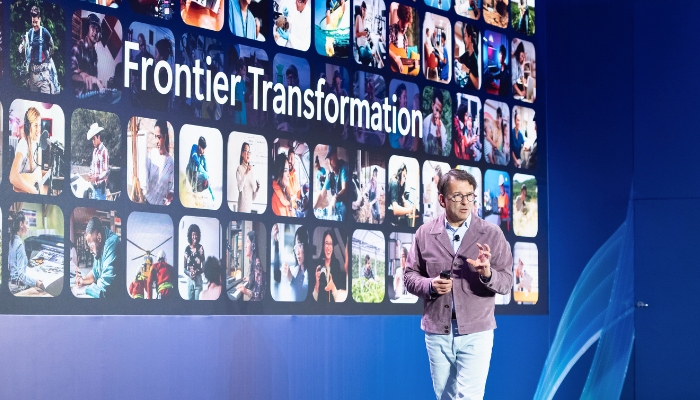
Hong Kong – Microsoft has presented its latest enterprise AI strategy in Hong Kong, describing how organisations in the territory are moving beyond early-stage trials and pilot projects towards wider operational use of AI technologies.
During the Microsoft AI Tour in Hong Kong, the company mentioned how local businesses are among the most active users of Copilot products in Asia. Many organisations are now focusing on integrating AI tools into routine workflows in order to improve productivity, automate processes and support decision-making at scale.
The company also introduced the Frontier Success Framework, which it described as a model to help companies adopt agentic AI systems with stronger oversight and measurable commercial outcomes. The framework focuses on four areas: improving employee experience, strengthening customer engagement, redesigning business processes and accelerating innovation.
“Across Hong Kong, organisations are rethinking how work gets done with agentic AI—moving beyond experimentation to running operations at scale,” Judson Althoff, CEO of Microsoft’s Commercial Business, commented.
“Frontier Transformation is helping them deliver business impact and measurable outcomes by embedding AI into real workflows, with trust, security, and governance fully integrated throughout.”
Meanwhile, the company also announced that Wave 3 of Microsoft Copilot is also scheduled for general availability in Hong Kong from 1 May 2026. The package combines Copilot tools, Work IQ and Agent 365 with security, identity management and governance controls intended for enterprise users.
Work IQ is designed to use workplace context, such as collaboration patterns and workflows, to improve the relevance of AI-generated assistance.
“As this frontier journey accelerates, Microsoft is committed to empowering local customers and partners to get ahead in the age of AI while maintaining strong data governance and enterprise‑grade privacy—ensuring human judgment remains firmly in control,” Leo Liu, General Manager of Microsoft Hong Kong and Macau, stated.
Microsoft also highlighted examples of adoption among Hong Kong businesses. Insurance group AIA is using Microsoft’s AI platform across areas including staff training, lead management, claims handling and customer self-service functions. These applications are intended to reduce manual workloads, improve accuracy and increase efficiency in a regulated operating environment.
Additionally, Retailer AS Watson Group has also introduced AI tools across its Hong Kong retail operations. The business is using Copilot and related technologies for product discovery, skin analysis, in-store personalisation, employee support and marketing content creation. The systems are also being used to analyse customer insights and support collaboration across teams.
Microsoft said these developments reflect a broader shift in Hong Kong, where businesses are increasingly concentrating on how AI can be embedded into long-term operating models rather than questioning whether the technology can deliver value.