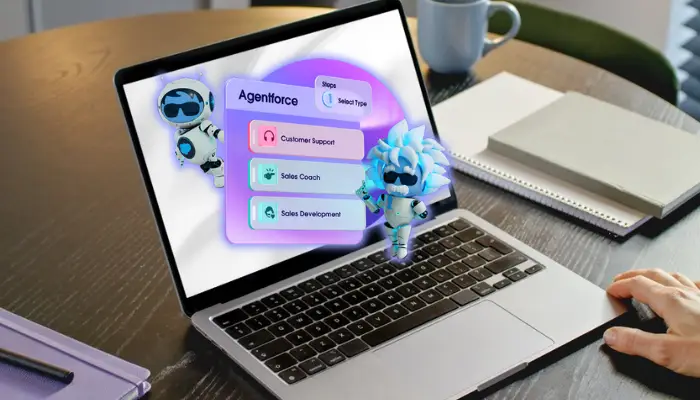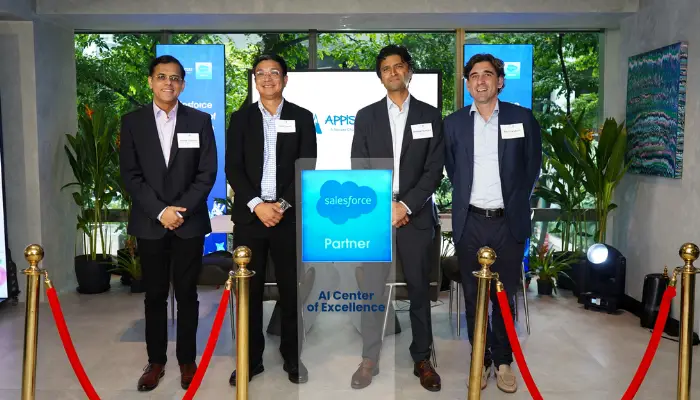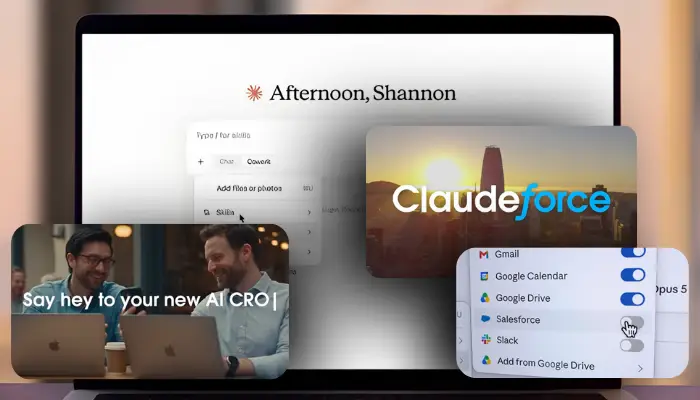

Singapore – Salesforce has expanded its Agentforce platform with a new portfolio of job-ready AI agents designed to handle high-value work across sales, service, commerce, employee experience, and back-office operations, according to the company.
The launch follows two years in which Salesforce says it has worked alongside customers across thousands of agentic deployments, delivering 7 billion Agentic Work Units across Agentforce and Slack, including 3.2 billion in the second quarter alone.
According to Salesforce, the experience gathered from these deployments showed that putting agents to work requires more than intelligence — agents also need to understand the job, operate across the business, and keep moving toward a goal as tasks grow more complex.
Rather than requiring companies to build every agent from scratch, the new portfolio offers agents pre-configured for specific roles, each arriving with the skills, actions and data models required for the job, Salesforce said.
The lineup includes Casey, a help agent that resolves customer service issues across voice, SMS, WhatsApp and web chat; and Paige, an IT and HR service agent that handles requests across Slack, portals and workplace tools. Both are generally available now.
Also included are Carter, a shopper agent that assists with product discovery, comparison and in-chat checkout; Marshall, a supply chain agent that automates back-office processes with an audit record of every action; and Piper, an inbound pipeline generation agent for B2B sales and marketing teams. These three agents are likewise generally available.
Hunter, an outbound sales agent that works a pipeline from research through to outreach, is currently in pilot, with general availability set for November 2026, Salesforce said.
Fin, described as a customer agent for resolving complex customer experience workflows across channels, is powered by Operator, a customer operations agent, and Fin Apex, a set of custom models trained for customer experience. Fin is generally available now.
Salesforce said customers can tailor each agent to their business, including assigning it a custom name, so that it functions as an extension of their brand and workforce. Every agent operates within the customer’s existing business rules, permissions and security settings, according to the company, and can be paired with Agent Script, Salesforce’s open-source language for agent behaviour, for granular control over decision-making.
Salesforce cited early results from customers using the agents. Eva, Engine’s help agent, fully resolves 50% of the company’s chat inquiries, according to Salesforce. Hunter builds 60% of Perk’s sales pipeline, while Paige resolves 70% of administrative requests at Autism Queensland, the company said.
Hibbett AI, which went live within six weeks, now handles 90% of core shopper journeys, according to Salesforce. Asana’s website agent, Piper, has driven a fourfold increase in conversation volume, with customers deploying Piper in 45 days on average, the company said. Separately, Salesforce said Fin autonomously resolves 79% of the conversations it sees at Anthropic.
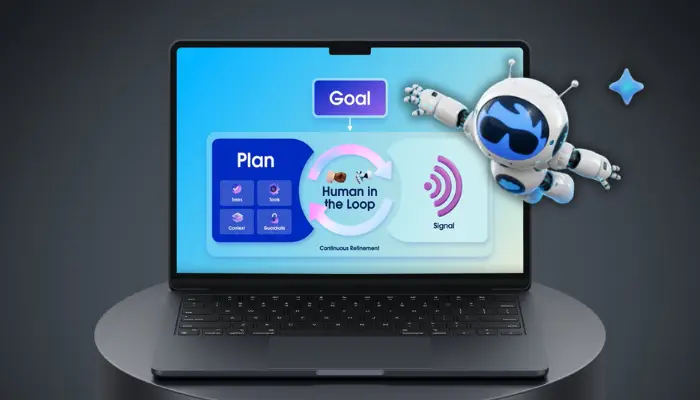
Beyond the agent lineup, Salesforce introduced a new long-horizon runtime for Agentforce, intended to let agents pursue goals across days and weeks rather than completing single tasks or interactions.
Under this runtime, a seller could ask Hunter to rescue at-risk deals before quarter-end, Salesforce said. Hunter would then convert that objective into a measurable goal, build a plan, and begin working toward it, determining the required tasks, tools and guardrails for autonomous action versus seller approval.
Three underlying capabilities support the runtime, according to Salesforce: memory, which preserves context and progress across sessions; durable execution, which keeps plans running over time and allows an agent to resume or adjust as circumstances change; and dynamic steering, which adapts an agent’s behaviour based on individual user feedback.
Hunter is the first agent to run on the long-horizon runtime, with Salesforce stating that additional agents in the portfolio will be moved onto it over time, alongside tools for customers to build their own long-horizon agents.
Salesforce also announced further additions to the Agentforce platform. AI Skills within Agentforce Coworker will let employees teach the system how to complete a task once and then scale that process across the workforce, with the feature currently in pilot and general availability expected in October 2026.
Multi-Agent Orchestration, now generally available, routes work across multiple agents so they can operate as a coordinated team on tasks that span roles, systems or stages of the customer journey, according to Salesforce.
Agent Optimizer, expected to reach general availability in October 2026, is designed to help teams build and refine agents and subagents, test performance, and analyse session traces to identify areas for improvement, the company said.