
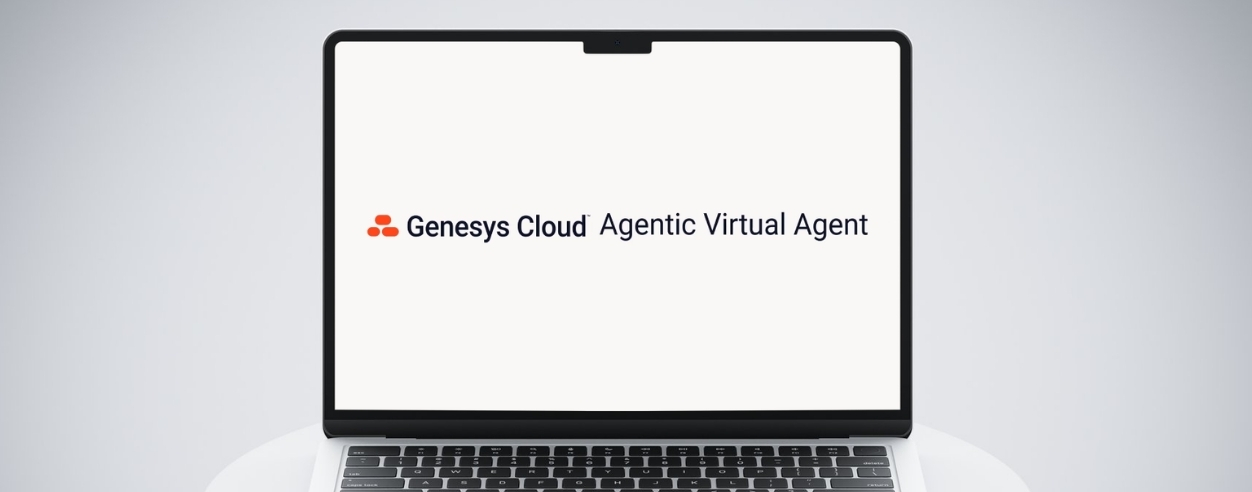
Singapore – Genesys has announced the launch of an Agentic Virtual Agent for enterprise customer experience built on large action models (LAMs). Delivered through the Genesys Cloud platform, the system is designed to autonomously manage customer requests from initiation to resolution by interpreting intent, determining next steps and executing multistage actions across front- and back-office systems.
The announcement comes as organisations seek to improve the effectiveness of self-service. While LLM-based tools have enhanced conversational interactions, they are not inherently structured to manage complex, cross-system workflows, which can result in inconsistent performance as requests become more complicated.
The new Agentic Virtual Agent functions as an orchestration layer capable of progressing tasks across systems such as customer relationship management, billing and service operations, while adapting to changes in context. Built-in controls are intended to support explainability, auditability and policy compliance as automated actions are carried out.
“Autonomy in customer experience only works when it’s built on trust, transparency and control,” Olivier Jouve, chief product officer at Genesys, commented.
“With our LAM-powered Agentic Virtual Agent, we’re enabling AI to reason, plan and safely take action across systems. This gives organisations a responsible way to move beyond conversations and deliver consistent outcomes customers can rely on.”
The virtual agent is configured through Genesys Cloud AI Studio, where organisations can define permissions, guardrails and behavioural parameters aligned with internal requirements. Genesys mentioned how the system is designed to improve containment rates and operational efficiency while maintaining oversight of automated processes.
Early exploration of the capability includes organisations such as M&T Bank and Banco Pichincha, as well as large enterprises in the healthcare and retail sectors. The LAM-based agentic virtual agent is intended to reduce the need for repeated handoffs or restarts during complex interactions.
The development follows a collaboration with Scaled Cognition, whose APT-1 large action model has been integrated into the platform to support action-oriented execution across enterprise environments. Additional support for open standards, including agent-to-agent and MCP, is planned to facilitate coordination between AI agents and enterprise systems under centralised governance.
“LLMs are mainly designed to generate text, not execute tasks—and in the real world, that gap leads to hallucinations and policy drift,” Dan Roth, co-founder and CEO of Scaled Cognition, stated.
“By combining our LAMs with the governance of Genesys Cloud, we will deliver a more reliable AI stack for enterprises around the world.”
Global availability is expected in the first quarter of the company’s 2027 fiscal year, between 1 February and 30 April 2026.