

Philippines – Boomi has announced new platform capabilities designed to help enterprises manage AI agents, monitor their activity and control the costs and security risks associated with deploying AI at scale.
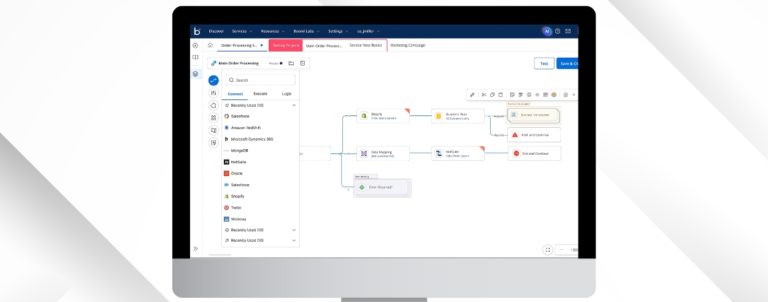
The centrepiece of the announcement is Boomi’s Agent Control Plane, which is designed to connect AI agents with core business systems while providing governance over their actions. The infrastructure can run across public cloud, a customer’s own cloud environment or on-premises infrastructure, with Boomi positioning the approach as a way for organisations to maintain greater control over their AI deployments and data.
The Agent Control Plane is described as vendor- and model-neutral, allowing enterprises to govern agents, tools and models across different environments. It also supports bring-your-own-model (BYOM) deployments and specialised small language models.
Boomi said the platform provides a centralised view of agents and tools through an AI gateway enforcement layer. The controls are intended to monitor activity, manage access and rate limits, track token usage, and require human approval for higher-risk actions.
The company cited Gartner research which states, “By 2027, 40% of enterprises will demote or decommission autonomous AI agents due to governance gaps identified only after production incidents occur.”
Gartner also reported in May 2026 that, “Applying uniform governance to all AI agents, regardless of their autonomy level and scope, can lead to enterprise AI agent failure.”
Boomi said the Agent Control Plane is intended to address some of these governance challenges by placing controls between AI agents and the enterprise systems they interact with. These can include transactional platforms such as Salesforce, SAP, Oracle and Workday.
The company’s announcement also highlights the growing focus on the cost of AI deployments. According to the FinOps Foundation’s 2026 State of FinOps survey, 98% of 1,192 practitioners surveyed now manage AI spending, compared with 31% two years earlier.
Boomi also referenced a Forrester Consulting thought leadership paper commissioned by the company in July 2026. The research found that 86% of surveyed leaders said their organisations had moved beyond AI agent pilots, while only 34% said they trusted the actions taken by their agentic systems. Organisations that deployed agents before they were ready reported an average of $2.1 million in additional costs, according to the research.
“The governance conversation has shifted from model risk to execution risk. Enterprises are no longer primarily worried about what an agent says. They are worried about what it does to a general ledger or a customer record, what that action cost and whether anyone can reconstruct the decision six months later in an audit,” said Michael Barnes, Chief Analyst, Enterprise IT at Omdia.
“Cloud and model providers each govern their own estate, which leaves the average enterprise holding several partial audit trails and no complete one. The organisations getting this right are putting enforcement in the path between the agent and the system of record, rather than alongside it,” Barnes continued.
The Agent Control Plane is part of a wider set of updates covering six areas of enterprise AI operations.
Boomi is introducing additional controls for monitoring agent activity, managing access and rate limits, tracking token consumption and requiring human approval for high-risk transactions. The company said its Boomi AI Gateway, which uses technology from its acquisition of Lunar.dev, will provide an enforcement layer combining MCP gateway and LLM gateway capabilities.
Another update, Boomi Connect, is designed to expose enterprise systems as governed Model Context Protocol (MCP) servers and tools. According to Boomi, MCP-compatible agents will be able to access more than 1,000 pre-built MCP servers and tools, with access provisioned through existing identity providers and tool calls authenticated, logged and metered.
Boomi is also expanding its hybrid runtime architecture to support agents, tools, bring-your-own models and specialised small language models within private networks and regional boundaries. The company said this approach can help organisations meet data sovereignty requirements and keep sensitive intellectual property behind corporate firewalls.
The platform will also include capabilities aimed at providing AI agents with greater access to business context and data lineage. Boomi said these features are intended to give organisations greater visibility into the provenance of data used in AI-driven actions.
For business users, Boomi is expanding its ability to create multi-system workflows using natural language. The company said each solution can be presented through business and technical views, allowing teams to review and test workflows before they are deployed.
The company is also expanding APIs and developer tools across its Enterprise Platform. The updates include tools for agent development, data management and platform operations, alongside an agent trust scoring capability.
“Two years ago, 31% of FinOps practitioners were managing AI spend. This year it is 98%. Finance has arrived in the middle of every AI conversation, and it is asking three questions most architectures cannot answer: which agent spent this, on what, and who approved it,” said Steve Lucas, Chairman and Chief Executive Officer at Boomi.
“Until an enterprise can answer those questions, AI is an expense nobody can defend, and what cannot be defended does not get funded. That is what Boomi’s Agent Control Plane changes: agents visible, actions governed, dollars attributable, running wherever the business requires it to run. Control is not the brake on enterprise AI. It is what makes scale possible,” Lucas continued.