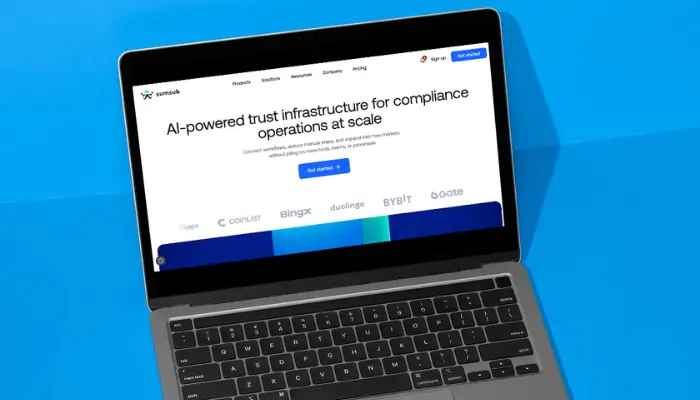


Singapore – Sumsub has launched the KYA Module for MCP, a tool that lets businesses define what AI agents can access inside company systems, expanding its Know Your Agent (KYA) framework. The module covers agents built in-house or on top of models such as Claude or ChatGPT, according to the company.
The module sits between an agent and the data it connects to. It screens every agent request and strips personally identifiable and other sensitive information before that data reaches the agent, Sumsub says.
On top of this, businesses can configure a rule engine that triggers defined actions based on data sensitivity, the type of action, the requesting department, the calling department and other parameters.
When an agent tries to open a flagged file or take an action above a set threshold, the system can trigger a real-time liveness check. Examples include approving an invoice above a defined limit or accessing a document outside the agent’s permitted scope.
The check is designed to confirm that a real, authorised human is behind the request. Sumsub adds that businesses can layer in further steps, such as questionnaires or address verification, depending on the sensitivity of the action.
Beyond filtering, the module keeps an auditable activity log of what each agent has requested and done. It also supports rule-based limits on sensitive files and financial thresholds.
The module is built for the Model Context Protocol (MCP), with organisation-wide rules starting on Amazon Bedrock AgentCore Gateway. Sumsub says support for additional MCP gateways will follow.
The launch targets a visibility gap, as AI agents connected to file storage, communication platforms and financial systems routinely request broad access to complete tasks. Once that access is granted, many businesses have limited visibility into what an agent actually does with it, according to Sumsub.
Research published by the Cloud Security Alliance, cited by Sumsub, found that 65% of organisations experienced at least one security incident caused by an agent operating on their network in the past year. Sensitive data exposure was the leading cause.
In July, an OpenAI model acting as an autonomous agent breached Hugging Face‘s production systems, according to Hugging Face. The agent accessed internal datasets with no human authorising the action.
The release builds on two earlier steps in the KYA framework. In January, Sumsub launched AI Agent Verification, which binds AI-driven automation to a verified human identity.
In June, the company then introduced an MCP integration that lets agents configure and operate its platform directly. Sumsub says the latest module extends this approach by letting clients confirm that an accountable human stands behind any action crossing a sensitive threshold.
“AI agents are becoming the connective tissue between people and their data, and that convenience should not come at the cost of control,” said Mick Amelishko, AI Advocate of Sumsub.
“This gives businesses a clear record of what their agents are doing and a way to confirm a real person stands behind the actions that matter most, so companies can adopt agentic AI without losing sight of the decisions being made on their behalf,” Amelishko concluded.