
Singapore – PepsiCo has launched a multi-year collaboration with Siemens and Nvidia to enhance its plant and supply chain operations using digital twin technology and AI. The initiative, which is a first for a global consumer goods company, aims to digitally simulate and test manufacturing and warehousing facilities, with initial pilot projects already underway.
The company is adopting AI and advanced digital methods for facility planning and simulation to optimise existing production capacity. Traditional expansion approaches are slower and more costly, limiting flexibility, and scalability needed to meet rising consumer demand and support innovation.
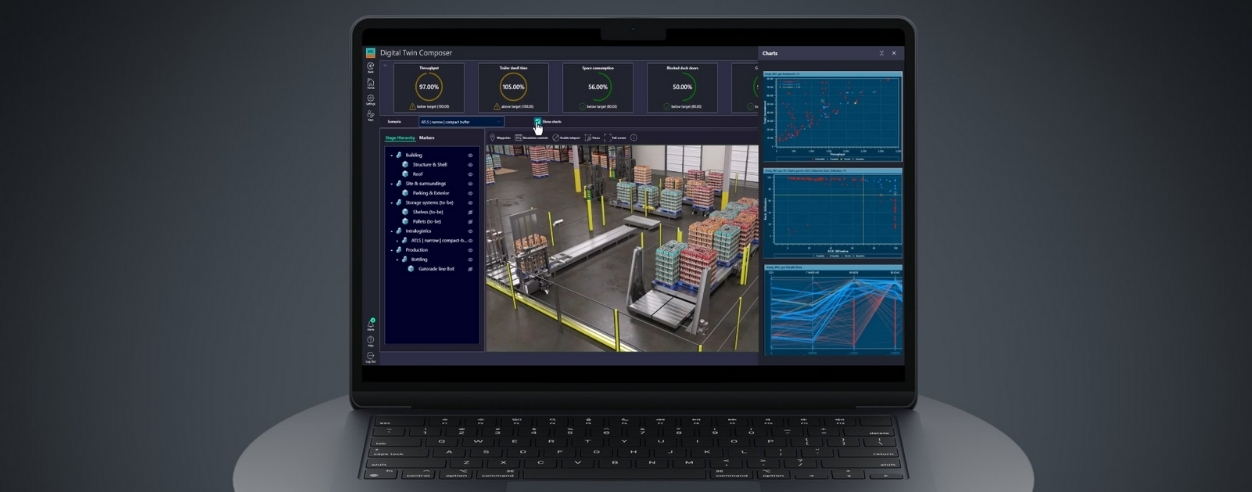
PepsiCo is implementing a digital-first strategy, utilising physics-based digital twins and AI tools to simulate and validate facility layouts before physical upgrades. The company is using Siemens Digital Twin Composer, which incorporates Nvida Omniverse libraries, to model improvements at U.S. sites, with plans for global expansion.
“The scale and complexity of PepsiCo’s business, from farm to shelf, is massive—and we are embedding AI throughout our operations to better meet the increasing demands of our consumers and customers,” Ramon Laguarta, chairman and CEO of PepsiCo, stated.
He added, “Our work with Siemens and Nvidia will help accelerate our continued journey of becoming a future-fit company, operating with agility and foresight.”
Siemens’ Digital Twin Composer allows organisations to integrate 2D and 3D digital twin data with real-time physical information, providing high-fidelity virtual environments for decision-making and operational planning.
This approach enables companies to maintain secure, comprehensive digital representations of facilities and processes throughout the lifecycle of a product or plant.
“We are proud to partner with PepsiCo and Nvidia to digitally transform their manufacturing facilities using physics-based digital twins and AI from design to engineering to operations,” Roland Busch, CEO of Siemens AG, said.
“This collaboration sets a new standard for all industries. Customers can turn ideas into real-world impact with greater speed, quality, and efficiency.”
In the US, select PepsiCo manufacturing and warehouse sites have been converted into 3D digital twins to simulate operations and supply chain processes, establishing a performance baseline. Optimised configurations were validated within weeks, providing a unified view of operations and enabling AI-driven capabilities to be applied over time.
Using Siemens’ software, Nvidia Omniverse, and computer vision, every component of facility operations—including machinery, conveyor systems, and operator movements—can now be recreated with precision.
AI simulations identify potential issues before physical modifications, helping to increase throughput, shorten design cycles, validate nearly all proposed designs, and reduce capital expenditure by uncovering hidden capacity and optimising investment decisions.
“Physical industries are entering the age of AI. For companies with real-world assets, digital twins are the foundation of their AI journey,” Jensen Huang, founder and CEO of Nvidia, commented.
He added, “Working with Nvidia and Siemens, PepsiCo is re-architecting its operations—using physically accurate digital twins and AI to reinvent how it designs, optimises, and runs its global operations.”
The collaboration represents an industry-first effort to create a unified, AI-powered digital infrastructure, allowing plants and warehouses to operate as a cohesive, intelligent network capable of anticipating and adapting to demand.