


Tokyo, Japan – Microsoft has set out plans to invest US$10 billion in Japan between 2026 and 2029, focusing on AI infrastructure, cybersecurity collaboration and workforce capability building. The move builds on its earlier investment in the country and aligns with Japan’s broader economic priorities around digital transformation and technological resilience.
A central element of the initiative is the expansion of domestic AI infrastructure. Microsoft is working with local providers, including Sakura Internet and SoftBank, to increase access to high-performance computing within Japan. These partnerships are designed to support advanced use cases such as robotics, manufacturing and the development of domestic large language models, while ensuring that data processing and storage remain within national borders.
“Microsoft is deeply invested in Japan, and today’s announcement will enable us to meet the country’s growing demand for cloud and AI services,” Brad Smith, Vice Chair and President of Microsoft, stated.
“We are bringing secure and reliable infrastructure on Japan’s terms, and helping equip its workforce to accelerate productivity and innovation across its economy.”
The company is also strengthening its cybersecurity engagement with Japanese institutions. This includes deeper cooperation with government bodies and law enforcement agencies to improve threat detection, share intelligence and address increasingly complex cyber risks. The approach reflects a growing emphasis on public-private coordination as digital infrastructure becomes more integral to national security and economic stability.
“Through our ongoing discussions with Microsoft, we are exploring the potential to offer customers in Japan flexible AI infrastructure options that take operational requirements into account,” Kunihiro Tanaka, Founder, CEO and President of SAKURA internet Inc, shared.
“Looking ahead, SAKURA internet will continue to contribute to the development of Japan’s digital society by strengthening digital infrastructure that can be used with confidence domestically.”
In parallel, Microsoft is scaling up its investment in skills development. It plans to train more than one million engineers and developers by 2030 through collaborations with major Japanese technology companies, alongside broader programmes aimed at equipping workers with AI-related capabilities. Additional initiatives will support researchers and academic institutions, enabling greater use of AI in scientific and industrial applications.
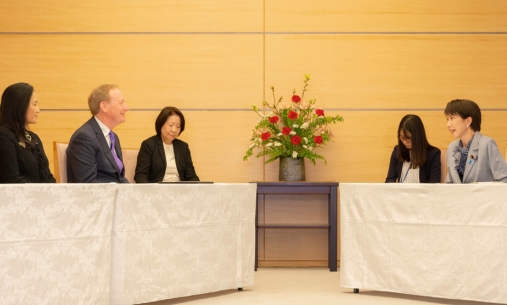
“We are very pleased that Microsoft has decided to make its largest-ever investment in Japan, totalling ¥1.6 trillion Japanese yen,” Sanae Takaichi, Prime Minister of Japan, commented.
“The ability to leverage GPU infrastructure provided by Sakura Internet and SoftBank when using cloud services is also highly significant for us, particularly from the perspective of safeguarding data sovereignty.”
The expanded commitment comes as adoption of generative AI accelerates across Japan’s workforce and corporate sector, with demand for cloud-based services and advanced computing continuing to rise. It also reflects the country’s position as a key market in Asia Pacific, where digital innovation, supply chain diversification and intra-regional trade are shaping long-term growth.