


Singapore – Singapore’s national Budget 2026 was recently announced, along with the commitment to establish a new National AI Council that will oversee and support AI transformation across key industries in the country.
CNA reported Singapore’s Prime Minister Lawrence Wong will chair the council to deliver AI Missions to specific industries and support enterprises with AI development, including upskilling the future workforce to be proficient in AI technologies.
This follows after major tech companies, such as Microsoft and Oracle, also recently launched AI initiatives to support AI innovation and transformation across Singapore.
Following the announcement, several tech leaders from major companies, including Autodesk, HubSpot, Siemens, Notion, and Xero Asia, shared their comments on the budget’s emphasis on AI innovation and investment, and what this means for enterprises looking to expand their intelligent technology capabilities.
Haresh Khoobchandani, vice president of APAC & Japan, Autodesk
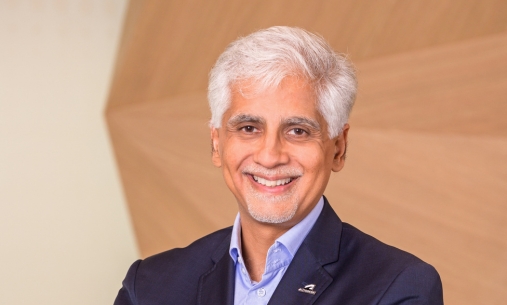
The establishment of the National AI Council and the launch of targeted national AI missions to transform key economic sectors, including advanced manufacturing, signal a decisive shift toward the sectoral support our industries need.
For instance, Design & Make industries like construction and manufacturing don’t just need general chatbots. They need high-level coordination, strategic direction, and support that these new initiatives promise.
Long-term success also hinges on people. The new six-month complimentary access to premium AI tools for trainees who take up select AI courses is a practical answer to the risks of AI being a disruptor if talent development doesn’t keep pace. This will provide students with relevant hands-on experience that equips them with the skills to enter the workforce as practitioners of AI, not just observers.
Tighter, more fluid collaboration between the public sector, private industry, and academic institutions is also essential to ensure Singapore’s workforce is able to pivot faster and more effectively to changing requirements in the AI era.
Megan Hughes, managing director and vice president of JAPAC, HubSpot

AI has rightfully taken centre stage in Budget 2026. As it becomes more deeply rooted in Singapore’s economy, its success must be supported by the right internal foundations. One of the biggest challenges with AI today is that it generates outputs at lightning speed, but without context, those outputs rarely drive real business results. To deliver impact, businesses must unify customer data and business context in one place, empowering humans and AI to work as a high-impact team.
AI adoption in Singapore isn’t being slowed by a lack of ambition, but by structural hurdles like the lack of a reliable data foundation. Digitalising businesses will be encouraged by the Champions of AI program, which offers the tailored support needed to close operational gaps like data integration.
Looking ahead, competitive advantage in Singapore’s next decade will be defined not just by speed, but by how effectively organisations embed AI into core operations. Leadership alignment and the ability to establish hybrid human-AI teams will matter more than technology selection.
Jornt Moerland, senior vice president of APAC, Siemens Data & AI

Prime Minister Lawrence Wong’s Budget 2026 statement reinforces a clear message – Singapore is no longer observing the AI revolution but is institutionalising it. We wholeheartedly welcome this proactive stance to extend access to enterprise AI tools for training, significantly lowering barriers to hands-on experimentation. This fosters innovation and accelerates a skilled workforce capable of leveraging advanced AI, much like how leading organisations drive digital transformation.
The redesign of SkillsFuture pathways for clearer AI learning is a major win. Empowering non-technical leaders and frontline staff with AI literacy creates a diverse talent pool that understands where AI solves real-world business problems. This resonates with our belief that AI is a strategic imperative, requiring broad adoption to unlock its potential and scale.
Andrew McCarthy, GM of ANZ, SEA and India, Notion

Singapore’s Budget 2026 marks a decisive shift from AI experimentation towards nationwide transformation. The “Champions of AI” programme and expanded tax incentives make it clear: we’re no longer asking if AI works—we’re asking how to make it work systematically across every sector.
PM Wong framed AI as a strategic advantage for Singapore. However, we are faced with a critical challenge. Our research shows 70% of Singaporean workers find AI tools lack company context, while the same 72% spend time editing generic AI outputs. The issue isn’t AI capability—it’s increasing busywork due to fragmented systems. The priority now is giving AI the context to produce work teams can actually use.
As the Productivity Solutions Grant expands to support AI-enabled solutions, the real opportunity lies in consolidating institutional knowledge within a connected workspace. When AI draws from a unified source of truth rather than 80+ siloed tools, it stops producing generic outputs and starts delivering work grounded in your company’s specific processes, memory, and goals.
Koren Wines, managing director, Xero Asia

What excites me most about this year’s Budget is the evolution of the country’s AI strategy. The focus is no longer just on equipping Singapore’s workforce with tools, but on building acumen to use AI meaningfully and impactfully.
Years of proactive government support have made Singaporean SMEs some of the most digitally savvy and equipped in the world. But when every business has access to the same tools, the differentiator becomes how innovatively they use it to achieve real results. Human ingenuity becomes the ultimate competitive edge.
With this support, Singapore’s workforce can move beyond using AI just for simple automation and manual tasks, instead leveraging it for high-level strategic moves that drive real growth and propel Singapore’s economy forward.