

Manila, Philippines – The Philippines is one of the growing markets across the ASEAN region that is beginning to invest in digital transformation initiatives to join the race of adopting advanced AI technologies.
These next-gen intelligent solutions are designed not only to help local organisations streamline workflows, but are also built to complement human teams by having the ability to understand local languages such as Tagalog.
Speaking with UpTech Media, Abraham Cuevas, regional vice president and country manager for Salesforce Philippines, explained how and why the company chose to expand in this market.
“The Philippines is one of the fastest-growing digital economies in Southeast Asia, with AI expected to unlock US$50.7b—nearly 12% of the Philippines’ 2023 GDP—by 2030,” Abraham told UpTech Media.
He added, “We see huge potential for businesses in the Philippines to accelerate their digital transformation and drive economic growth with agentic AI.”
Currently, Salesforce already supports several major Filipino businesses, including Maxicare, PLDT, Philippine Airlines, Converge ICT Solutions, and the Bank of the Philippines Islands (BPI) with their digital transformation and AI journeys.
The company’s expansion following the opening of new offices in Makati city brings its customers and partners in close proximity to Salesforce’s experts in supporting even more businesses with decision-making for their agentic transformation initiatives.
Abraham shared that the new Agentic Era opens a once-in-a-generation opportunity for Philippine businesses to transform their operations from the ground up.
“We look forward to working closely with our customers and partners locally to help more businesses with their transformation into Agentic Enterprises,” he said.
High investments in AI and the essential need for upskilling
The government and private sectors in the Philippines have a growing appetite for AI innovation and adoption nationwide.
Abraham explained that the Department of Science and Technology (DOST) plan to invest an excess of approximately US$44m in AI projects by 2028, underscoring the nation’s strong commitment to utilising emerging technologies for national development.
“This momentum is reflected across the private sector as well, with 88% of CEOs in the Philippines seeing AI as essential to growth and wanting to embed AI into key business processes,” he commented.
The commitment from the nation’s government and strong interest of the private sector place businesses in the Philippines with an unprecedented opportunity to harness AI to grow and evolve from a service-oriented economy to a knowledge-driven innovation hub.
However, while there is a strong push to adopt emerging and next-gen AI technologies, one key aspect must be addressed: the need to educate and upskill the workforce in preparation to integrate intelligent technologies.
“A major barrier to AI innovation and adoption in the Philippines is the existing skills gap within the workforce,” Abraham stated.
He further explained, “According to the Future of Jobs Report by the World Economic Forum, 68% of Filipino workers will need training to meet evolving skills demands in the future workplace. However, only 38% have completed their training to date— a figure much lower than the 50% global average.”
To address this skills gap, Salesforce has planned to train around 12,000 Filipino workers in in-demand CRM and AI skills over the next 5 years to ensure that the Philippine workforce is equipped with the knowledge, skills, and tools needed to take on jobs the evolving digital economy demands.
Following this, progress has already begun thanks to Salesforces’ Trailhead, an online free learning tool accessible to all, enabling more than 53,000 Filipinos to learn the fundamentals of generative and agentic AI.
“Businesses cannot afford to ‘wait-and-see’ and must proactively establish systems, procedures, and infrastructure that allow them to seize the AI opportunity,” Abraham commented.
He added, “Crucially, businesses in the Philippines need to remain open to constant experimentation and move with agility to capitalise on the latest AI advancements, or risk being left behind.”
Digital collaborative autonomy between AI agents and human teams
Major businesses in the Philippines are already making headway with adopting AI technologies to streamline operations and be prepared for future technological demands across industries.
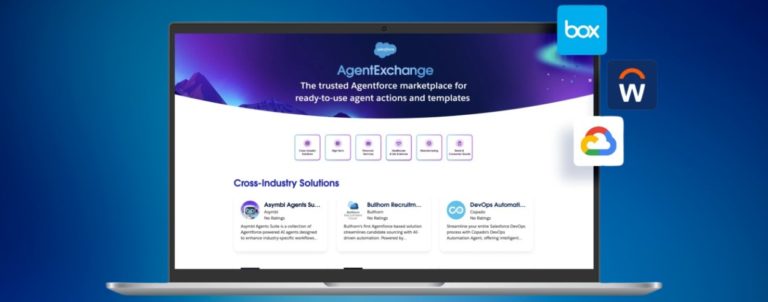
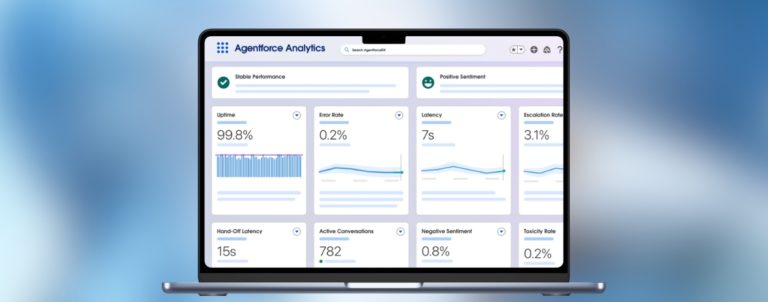
Salesforce has already deployed its Agentforce 360 platform (formerly Agentforce) designed to help connect humans and AI agents into one trusted system.
“With Agentforce 360, businesses in the Philippines have the opportunity to transform into Agentic Enterprises, where humans work alongside AI agents to move faster and make smarter decisions,” Abraham explained.
“It is fundamentally redefining how work gets done in the age of AI by offering business access to tailored, accessible, and scalable digital labour that operates in the flow of work.”
One organisation that Salesforce is working with in the Philippines is Maxicare. The health maintenance organisation has already transformed its digital operations with the use of Agentforce 360 to automate dental care letter of authorisation (LOA) processes, delivering faster dental care to patients.
Essentially, partner clinics of Maxicare can directly interact with an AI agent to request LOAs, reducing manual friction points in the overall process and delivering more efficient patient care.
The same platform is also supporting smaller businesses in the Philippines by democratising innovation and empowering MSMEs to pursue ideas and launch new business models with minimal investment at scale.
“For example, MSMEs, which form 99% of all companies in the Philippines, can leverage agentic AI to match the customer-serving capacity and capabilities of larger enterprises,” Abraham shared.
He also pointed out, “Businesses can scale with AI agents to improve access to their products and services, especially across the geographically dispersed archipelago, where there are only a few major cities and economic zones outside of Metro Manila.”
Providing access to this platform to small businesses across the nation, outside of large urban centres, is crucial in empowering local MSMEs to grow their operations in line with the evolving demands of AI technologies. It delivers digital inclusivity and accessibility, allowing local businesses to thrive in the AI era.
Localising AI agents with a touch of Filipino hospitality
Culture plays a crucial role when it comes to adopting and integrating AI technologies. Without acknowledging the mindset, culture, and people from a specific market, intelligent technologies will simply be of little value.
This is why the two AI agents included as part of Agentforce 360– Agentforce Service and Employee Agent– have been designed to be available in Tagalog to support local businesses tapping into the power of agentic AI and drive efficiency and deliver localised CX.
“The AI agents can process information, reason, and provide proactive support in Tagalog, allowing businesses to deliver a faster and better service experience for their customers,” Abraham explained.
He added, “The availability of the agent in Tagalog also makes it easier than ever for Filipino employees across all levels to tap into the potential of agentic AI.”
Agentforce Service is designed to leverage AI agents to deliver omnichannel CX in any industry, while Employee Agents serves as a digital assistant that assists employees in performing routine tasks, giving them time to focus on more meaningful and strategic work.
Autonomous agents that communicate in the local language and connect with human teams pave the way for agentic AI to support MSMEs across the Philippines, especially those located in smaller cities with emerging economies.
“Agentic AI can be an economic driver in smaller cities. It is an equaliser for businesses in smaller cities, helping them compete as effectively as enterprises in larger urban centres,” Abraham shared.
“This can help spark unprecedented growth, especially in next-wave cities, creating new opportunities for workers and enabling businesses to expand their services, serving more customers nationwide.”
****
The Philippines is on an upward trajectory in AI innovation and adoption, with the government’s commitment and the private sector’s push to accelerate the integration of intelligent technologies.
While there is still a need for education and upskilling, Salesforce foresees more local businesses embracing agentic innovations, reaching both urban and emerging economic centres.