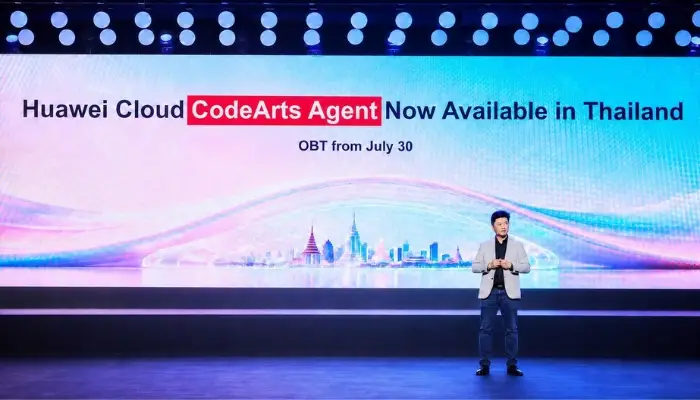

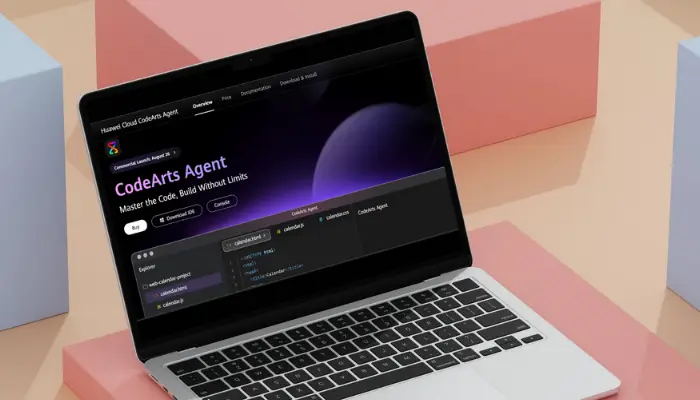
Singapore – Huawei Cloud has rolled out CodeArts Agent for commercial use across Asia Pacific, marking a fresh step in the company’s drive to embed agentic AI into software development.
The Basic and Professional editions moved from public beta to general availability on 28 August, giving Huawei Cloud’s international users full access to the platform.
The launch extends CodeArts Agent’s footprint beyond its original markets and signals Huawei Cloud’s intent to accelerate AI adoption across the software development lifecycle.
At its core, CodeArts Agent merges large code models, integrated development environment (IDE) functions and autonomous development workflows into a single coding experience.
This combination allows the platform to handle tasks ranging from code generation to software engineering queries, alongside automated unit test generation.
Huawei Cloud has positioned the tool for complex software projects and enterprise-scale deployments, framing it as part of a broader shift in how developers approach AI-assisted coding.
Several features distinguish CodeArts Agent from conventional AI coding assistants, according to the company.
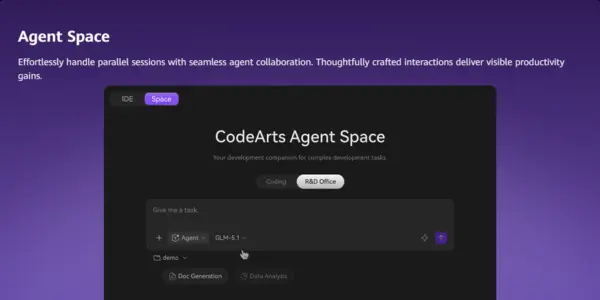
Chief among them is Agent Team, a multi-agent system comprising 16 specialised agents that span the development lifecycle, covering requirements analysis, architecture design, coding, testing, issue resolution and code review.
By replicating the dynamics of a professional engineering team, Agent Team can independently plan and carry out lengthy, complex development tasks without constant manual intervention.
Beyond multi-agent collaboration, CodeArts Agent draws on Huawei’s internal software engineering practices, incorporating specification-driven development methods together with more than 30 reusable engineering skills developed in-house.
These skills effectively convert years of proven engineering discipline into capabilities the AI agents can apply directly.
The platform also offers deep code comprehension, with the ability to understand and retrieve information across tens of millions of lines of code.
This gives the agents the contextual grounding needed to extend or update existing software systems efficiently, rather than treating each task in isolation.
To accommodate varied development setups, CodeArts Agent supports multiple access routes, including AI-native IDEs, plugins and CLI/TUI interfaces.
Enterprise-grade management and security features are built in as well, enabling organisations to fold AI agents into existing workflows while keeping the experience consistent across environments.
The release arrives as AI-assisted coding continues to evolve beyond basic functions such as code completion and generation.
Increasingly, the technology is moving toward more advanced capabilities, including project comprehension, autonomous task planning and multi-agent collaboration.
As a result, developers are shifting from simply using AI coding tools to working alongside AI agents as active collaborators in the development process.
Looking ahead, the company has indicated that CodeArts Agent will continue integrating its software engineering expertise with advancing AI technologies, with the stated aim of delivering smarter, more efficient and more secure development experiences.