
Hong Kong – Hong Kong’s cross-border trading companies have moved well beyond experimenting with new technology, according to a new report examining how artificial intelligence and fintech are reshaping the city’s trade sector, published by global financial platform Airwallex in partnership with Hong Kong Trade Development Council (HKTDC).
The findings offer a snapshot of how firms in the city are adapting to rising operating costs, economic uncertainty and increasingly complex global trade dynamics.
Rather than simply digitising existing workflows, the report finds that trading companies are now redesigning how they operate, embedding AI, fintech and data-driven tools directly into the core of their cross-border operations.
According to the report, technology’s role within trade has fundamentally shifted, moving from a supporting function to the operational backbone of the sector.
AI adoption among cross-border businesses surged from 25% to 79% within just 12 months, marking a rapid transition from early-stage testing to routine, everyday use.
Furthermore, more than two-thirds of respondents, 67%, plan to expand their use of AI further still, as the technology becomes embedded across finance, operations and sourcing functions alike.
Momentum behind this shift shows little sign of slowing, with only 1% of respondents expecting to scale back their AI use over the next 12 months.
As new applications become more accessible and business use cases continue to expand, AI is increasingly viewed as a long-term strategic capability rather than a passing innovation.
More broadly, the report notes that over 68% of respondents are investing in technology-enabled, data-driven solutions to improve efficiency, strengthen decision-making and stay competitive amid an increasingly complex trading environment.
Beyond AI, trade in Hong Kong is also becoming markedly more agile, digital and responsive, the data shows.
The share of trading companies adopting an only-as-needed sourcing strategy has nearly doubled, climbing from 15% to 29%, reflecting a broader shift towards faster, more responsive decision-making.
At the same time, close to 80% of respondents expect to increase their use of online sourcing channels over the next year, with hybrid models emerging as businesses blend digital efficiency with the trust built through in-person engagement.
As global conditions remain volatile, these shifts are, according to the report, helping businesses respond more quickly to changing demand, manage risk more effectively and protect margins.
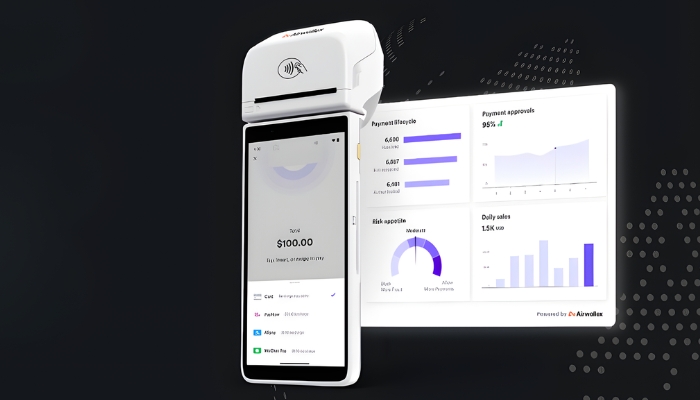
Turning to financial infrastructure, the report identifies fintech as an increasingly essential enabler of trade performance, rather than a peripheral convenience.
Adoption of fintech solutions for cross-border transactions has roughly tripled over the past 12 months, with around 60% of trading companies now using digital financial services in some form.
Businesses cited several drivers behind this shift, turning to fintech primarily to reduce costs (59%), accelerate payments (48%) and gain greater visibility (36%) over their global financial operations.
However, as adoption accelerates, trust is emerging as the defining factor shaping the next phase of growth, the report finds.
Nearly two-thirds of respondents, 63%, cite fraud and security as their biggest concern when using fintech, while 42% point to regulatory compliance as a key issue.
Consequently, businesses are placing greater emphasis on working with partners capable of delivering secure, transparent and compliant financial infrastructure.
Elsewhere, the report highlights the jewellery sector as a notable case of untapped digital potential, despite historically lagging behind other industries in technology adoption.
Some 37% of jewellery trading companies are now actively evaluating fintech solutions, giving the sector the highest future intent of any industry surveyed.
This is a notable finding given that the sector’s complex, fragmented supply chains and relationship-driven business models have traditionally made digital transformation more challenging.
While barriers such as provider reliability and regulatory compliance remain top of mind for jewellery traders, the report suggests this strong intent points to a significant, largely untapped market for digital financial services and technology providers.
Commenting on the findings, Smilely Lam, Associate Executive Director of the Hong Kong Trade Development Council (HKTDC), said, “The HKTDC has long been committed to supporting the development of SMEs, promoting digital transformation and enhancing business competitiveness. This report highlights a clear inflection point in this transformation. Technology has evolved from a supporting role into a core enabler of competitiveness, risk management and long-term growth.”
“Nearly 80% of surveyed cross-border traders have already adopted AI in some form, underscoring the pace at which innovation is being embedded into trade practices. More broadly, businesses are moving beyond basic digitisation to redesign their sourcing strategies, operating models and engagement with global markets,” Lam further expressed.
On the other note, Arnold Chan, APAC General Manager at Airwallex, which conducted the survey in partnership with hktdc.com sourcing, said, “Hong Kong trading companies are moving beyond adopting new technology to transforming how they operate. AI and fintech are becoming the infrastructure behind modern trade, helping businesses move money faster, improve visibility into cash flow and respond more quickly to changing market conditions.”
“Fast, integrated, and intelligent financial systems are no longer a competitive advantage, but a requirement. Against this backdrop, Airwallex as an AI-native financial platform helps businesses build more integrated, secure and scalable operations to compete in this new era of global trade,” he continued.
Taken together, the findings suggest that Hong Kong’s trading sector is entering a new phase, one defined less by whether companies adopt new tools and more by how effectively they build agile, digitally enabled operating models.