
Singapore – Toku has introduced Makimoto, an open-source conversational AI initiative aimed at organisations operating under APAC data residency requirements.
The first release, Makimoto Kawa, is scheduled to become available on 1 July 2026 as a managed transcription API hosted in Singapore. Further country-specific APIs and a self-hosted containerised version are planned, allowing deployment within a customer’s own cloud environment, data centre or chosen jurisdiction.
The launch comes as data protection and localisation requirements continue to develop across the region. Businesses handling customer calls, transcripts and voice interactions are facing increasing scrutiny over where information is processed and stored, particularly in markets such as Singapore, Indonesia and Vietnam.
The initial version of Kawa is designed to keep customer audio and transcript processing within Singapore, which may support organisations seeking to align with local regulatory frameworks and sector-specific guidance.
“In an era where AI capabilities evolve on a weekly cycle, the biggest risk of any technology decision is creating tomorrow’s legacy today,” Thomas Laboulle, Founder and CEO at Toku, stated.
“With Kawa, customer data is processed in country, not just stored there. Every stage of the pipeline runs within a single jurisdiction, so our customers always know exactly where their data is going.”
Makimoto Kawa is described as an orchestration framework that combines multiple open-source components into a transcription pipeline. The orchestration layer will be released under the MIT licence, allowing developers to adapt and modify the software.
“We are obsessed with the orchestration layer, because models and components turn over every few months, but the layer that keeps them swappable is what makes the whole stack durable,” Thomas added.
At launch, the service will offer two APIs: one for real-time transcription, intended for uses such as live voice interactions and captioning, and another for post-conversation transcription of recorded calls or archived audio.
The platform’s workflow includes audio resampling, noise reduction, voice activity detection, speaker separation, speech recognition and post-processing functions such as speaker labelling and structured output formatting. The individual stages can be adjusted or replaced according to language, sector or deployment needs.
Meanwhile, some internal components of the Kawa will remain managed by Toku, with plans to open additional parts of the technology over time.
Makimoto will operate through Makimoto Technology Pte Ltd, a wholly owned Toku subsidiary established to manage governance of the open-source project and distinguish between community and enterprise editions.
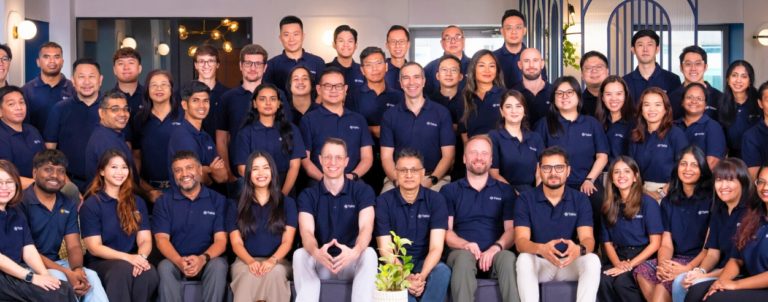
Alongside the product launch, Toku is opening ten Singapore-based roles linked to the Makimoto team, targeting recent graduates for positions in engineering, developer relations and community support.
Makimoto Kawa is intended to work with regional language models, including projects such as SEA-LION from AI Singapore and MERaLiON from A*STAR.