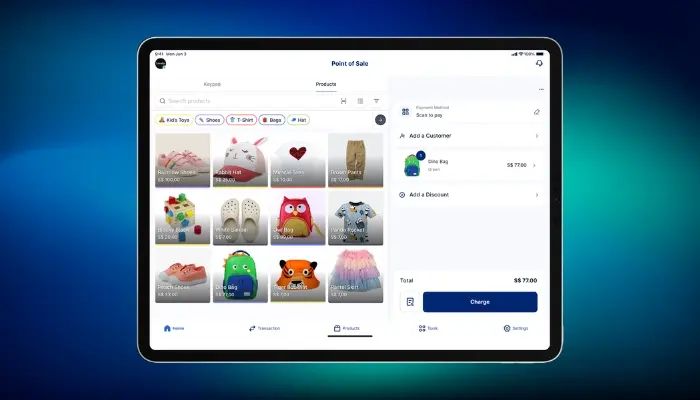


Manila, Philippines – HitPay has launched the first phase of its CFO Stack, a suite of finance tools aimed at helping small and medium-sized enterprises (SMEs) manage more payment operations within a single platform. The Manila-based announcement, made on 16 September 2026, introduces HitPay Virtual Accounts, a feature that allows businesses to receive bank transfers from corporate customers through the same account they already use to accept customer payments.
According to HitPay, Virtual Accounts bring business-to-business (B2B) collections into the platform alongside existing payment methods, including cards, PayNow/QR and payment links. The company said this integration allows for real-time payment confirmation and simplified reconciliation across all transaction types.
HitPay is a payment platform serving SMEs across Southeast Asia. The company said it currently supports more than 15,000 finance teams across Singapore, the Philippines and Malaysia, and is introducing Virtual Accounts to help businesses reduce manual work as they scale.
The launch comes as B2B payments across Southeast Asia become increasingly digital, with finance teams managing a growing number of collections, payables and reconciliation flows across disconnected systems. McKinsey has noted that AI-powered agentic workflows are enabling further automation in both payable and receivable processes, as chief financial officers (CFOs) look to monitor working capital in real time and reduce manual finance work.
In Singapore, a survey by Atradius found that around four in five businesses reported overdue B2B invoices, with delays often linked to internal processes, approval cycles and invoicing issues.
“Growing businesses manage more than customer payments. They also collect from other businesses, track incoming funds and keep financial records accurate,” said Aditya Haripurkar, Co-Founder and CEO of HitPay.
“But SMEs have traditionally had to stitch these workflows together across different tools. CFO Stack is being built to bring more of these financial operations into one platform, starting with B2B collections through Virtual Accounts,” Haripurkar said.
Corporate customers often rely on bank transfers because they align with existing accounting and approval processes, HitPay said. For businesses on the receiving end, however, this can create additional manual work, ranging from confirming incoming funds to reconciling transactions against invoices.
HitPay Virtual Accounts address this by giving businesses dedicated account details that corporate customers can transfer funds to directly. Once a transfer is made, businesses receive real-time confirmation through the HitPay Dashboard, and the payment is recorded as a charge alongside other HitPay transactions.
The feature is designed specifically for businesses collecting higher-value B2B transfers. Rather than applying percentage-based collection fees, HitPay charges a fixed cost per transfer, which the company said helps businesses manage larger payment amounts more efficiently.
Virtual Accounts are currently live in Singapore and the Philippines. The feature operates under HitPay’s existing regulatory licences as a Major Payment Institution under the Monetary Authority of Singapore (MAS) and as a registered payment system operator under the Bangko Sentral ng Pilipinas (BSP).
HitPay clarified that Virtual Accounts function as a collection method rather than a bank account. Funds received are routed into the merchant’s available HitPay Wallet and subsequently paid out to its linked external bank account, following the business’s normal HitPay payout schedule.
Looking ahead, HitPay said BillPay will follow as Phase Two of the CFO Stack, helping businesses manage supplier invoices, approvals and payments from within the same platform. Payroll and Spend Management will then form Phase Three, further extending the CFO Stack across additional finance workflows.
“With Virtual Accounts, we are helping businesses bring B2B collections into the same environment as the rest of their payment activity,” Haripurkar added.
“The next phases of CFO Stack will continue building towards a more connected finance platform, where businesses can manage more of their financial operations in one place,” Haripurkar concluded.