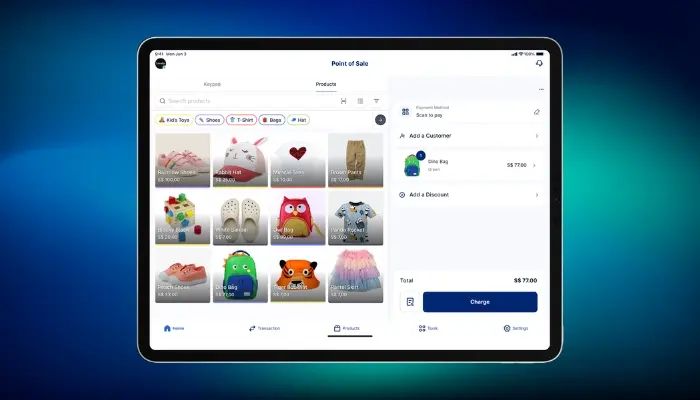


Singapore – Superbench, an AI-powered customer engagement platform for business-to-consumer (B2C) service businesses, has partnered with HitPay, a Southeast Asian payment platform for small and medium enterprises (SMEs).
The partnership brings together customer engagement and payment processing under a single system, covering the full journey from a customer’s first message to a completed transaction.
Most AI tools require businesses to manually upload price lists, write FAQ answers, and update this information whenever something changes. Superbench, however, maintains this knowledge automatically, updating it as pricing, products or promotions shift.
Meanwhile, HitPay supplies the payment infrastructure, spanning online deposits to in-person point-of-sale systems. Together, the two platforms address elements that many AI tools for small businesses leave unresolved: ongoing data upkeep and payment processing.
This matters because Southeast Asia’s economy is largely driven by small, consumer-facing businesses. Most of these operate in services, retail, hospitality, personal care and other trades that deal directly with the public rather than with other businesses.
Southeast Asia’s e-commerce sector, widely regarded as a key indicator of how this activity is moving online, is projected to reach $185 billion in gross merchandise value this year. This figure comes from the e-Conomy SEA 2025 report, published by Google, Temasek and Bain & Company.
Even so, AI adoption across this segment remains uneven. In Singapore, AI adoption among SMEs tripled from 4.2 percent to 14.5 percent in 2024, according to the Infocomm Media Development Authority, yet this still trails significantly behind the 62.5 percent adoption rate among larger firms.
In Malaysia, meanwhile, AI adoption rose from 20 percent to 27 percent of businesses this year, according to research from Amazon Web Services cited by Bernama.
The Philippines shows a similar pattern: only 14.9 percent of firms use AI tools, per a study by the Philippine Institute for Development Studies, with adoption concentrated largely among large, urban companies.
This uneven adoption highlights a further area where small businesses may require support: payment infrastructure. This layer carries its own complexities, including fraud detection, card network rules and licensing requirements that vary across markets.
HitPay addresses this by managing compliance and regulatory requirements across Singapore, Malaysia and the Philippines. Its infrastructure is also designed to integrate with AI development tools already in widespread use, allowing platforms to plug in a working payment flow rather than building one independently.
“Getting a customer from ‘I’m interested’ to actually booking and paying is where platforms tend to lose people, because the tools in between are fragmented”, said Jingjing Zhong, Co-Founder of Superbench.
“For a small business, that fragmentation is costly. A customer who has a great conversation and then hits a clunky checkout, or a payment method they don’t recognise, remembers the checkout, not the conversation. Every part of that journey has to be built with the same care, by tools that are actually built to work together”, Zhong added.
Aditya Haripurkar, Co-Founder and CEO of HitPay, echoed this view. “Every AI tool a small business adopts eventually touches money, a deposit for a service, a card payment at checkout, a refund when something goes wrong”, he said.
“That’s the layer we’ve spent years building specifically: catching fraud, following card network rules, and settling funds into the right account and currency, every time, in every market. None of that can be improvised. It has to be built and licensed the way a bank builds it, which is exactly why it’s worth a platform like Superbench pairing with a specialist for that piece, so they can put their energy into what they do best”, Haripurkar continued.
The integration is now available to B2C service businesses across Singapore, Malaysia, Australia and the UAE, with early adopters already active in the aesthetic and family services sector.