

Singapore – Ant International is expanding the global rollout of its Agentic Mobile Protocol (AMP), with digital wallets and payment acquirers joining the initiative as the payments industry explores how artificial intelligence (AI) agents can participate in commercial transactions.
The company has also begun working with Mastercard and Visa on a Know-Your-Agent (KYA) interoperability framework intended to support the identification and onboarding of AI agents across payment networks, digital wallets, agent platforms and marketplaces.
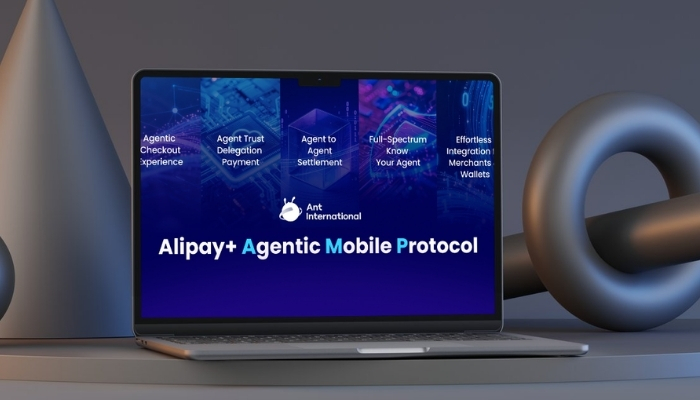
Launched in April 2026, AMP is an open payment protocol developed by Ant International for digital wallets, super apps, smart devices and other mobile interfaces. It is designed to enable AI agents to initiate and execute payments while maintaining user authorisation and control.
The protocol is being rolled out across Ant International’s Alipay+ ecosystem, which comprises more than 50 mobile payment partners and over 10 national QR networks. According to Ant International, the ecosystem connects 150 million merchants with more than 2 billion consumer accounts globally.
During the first phase of the rollout in 2026, 10 Alipay+ digital wallet partners will support AMP within their respective agent security architectures. The participating wallets are Alipay in China, AlipayHK in Hong Kong, DANA in Indonesia, GCash in the Philippines, KakaoPay and Toss in South Korea, MPay in Macao, TNG eWallet in Malaysia, TrueMoney in Thailand and Starryblu in Singapore.
Seven acquiring partners — Adyen, Allinpay, Checkout.com, Fiserv, Global Payments, Nuvei and Worldline — are also participating in the first phase.
Ant International said the expansion is intended to support the development of agentic commerce, in which AI systems can carry out tasks such as selecting services and initiating transactions on users’ behalf.
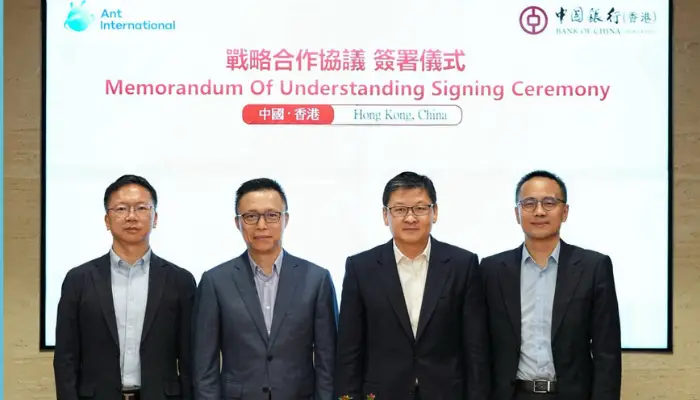
“AMP has been created to enable agents to enter existing mobile payment systems as trusted actors. We are inspired to see how, a few months into its launch, more and more wallets and payment partners are accelerating their AI strategy by bringing this exciting capability to users in the real world,” said Jiang-Ming Yang, Chief Innovation Officer at Ant International.
Alongside the AMP rollout, Ant International, Mastercard and Visa have begun collaborating on a KYA interoperability framework. The proposed framework is intended to establish common principles for agent identification and onboarding while allowing individual payment networks to retain their own verification and decision-making processes.
The collaboration will take place through BuildFin.ai, an industry platform convened by the Monetary Authority of Singapore (MAS). It will build on the Safeguards for Agentic Finance at Runtime (SAFR) framework and focus on areas including AI agent verification, accountability and risk management across payment ecosystems in Singapore.
Ant International said the work is aimed at addressing trust and governance issues as AI agents become more involved in financial transactions.
“Meanwhile, agentic commerce will only have a real path to mass adoption when supported with a deep foundation of trust. While AMP continues to invest in our own security solutions like AgentSafePay, we are also committed more than ever to strengthening collaboration with card networks, policy leaders like MAS and other stakeholders on new accountability mechanisms, to ensure all agentic transactions are protected by our collaborative agent identity and authorisation capabilities across markets and rails,” said Yang.
Ant International has also made AMP open source through GitHub, providing source code, software development kits and technical documentation for developers, AI platforms, wallets, acquirers and financial institutions.
The protocol includes features intended to support transactions across devices, establish permissions for AI agents and provide mechanisms for identifying agents and their authorised capabilities. Ant International also said AMP can reduce the number of steps required to connect a payment agent to a wallet by 50%.
Other features include an Agent Trust Rating for determining levels of agent autonomy, AgentSafePay for addressing agent-related payment risks, and an agent-to-agent settlement mechanism capable of supporting transactions as small as US$0.000001.
The wider rollout comes as payment companies and digital wallets examine how existing payment infrastructure can accommodate transactions initiated by AI systems. Participating companies, including Adyen, Checkout.com, DANA, Fiserv, Global Payments, MPay, Nuvei, Starryblu, TNG eWallet, TrueMoney and Worldline, have outlined their respective approaches to supporting agentic commerce through AMP.
Ant International said it plans to continue working with payment networks, financial institutions and other industry stakeholders on interoperability, security and governance as AI agents become more integrated into digital commerce.