
The trading industry in 2026 is moving through rapid change. Retail participation continues to grow, digital assets remain part of the financial mainstream, and political and economic uncertainty are keeping markets volatile. At the same time, brokers face tighter regulation, stronger competition, and rising expectations around technology and user experience.
In this environment, platforms like Versus Trade appear to be taking a different approach — expanding beyond standard trading products, investing more heavily in partnership ecosystems, and building stronger regional connections in Southeast Asia. As the industry evolves, is Versus Trade positioned to address the key challenges shaping the brokerage market in 2026?
Putting the trading experience first
Across the industry, the focus is shifting toward the overall trading experience — not just what markets are offered, but how smoothly the platform works from registration to execution.
Versus Trade emphasises speed and accessibility throughout the whole process. Registration and onboarding are designed to be completed quickly, allowing users to move from sign-up to funded account in minutes.
Trading conditions are another key differentiator. Tight spreads and fast execution can have a direct impact during volatile market conditions, especially for active traders. Built on MetaTrader 5, the platform supports trading across desktop, web, and mobile with fast execution and real-time market access.
The same approach extends to fund management. Instant deposits, fast withdrawals, and multiple payment methods reflect growing demand for flexibility and full control over account access.
Expanding beyond standard trading products
As competition increases, brokers are under pressure to offer more. Traditional instruments such as Forex and CFDs remain central, but platforms are increasingly looking for new ways to differentiate themselves.
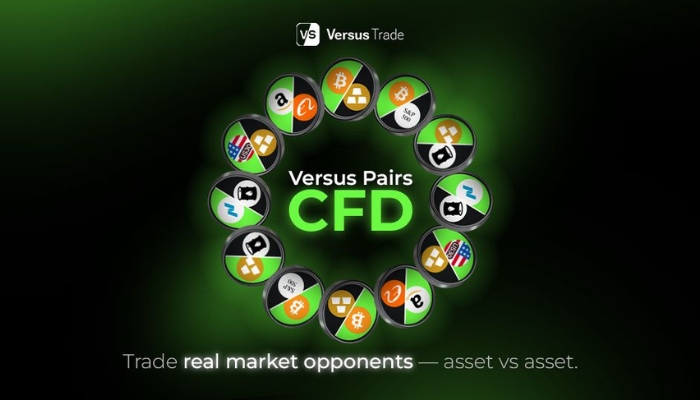
Versus Trade responds with a broader product ecosystem that includes Forex, metals, indices, cryptocurrencies, and commodities across more than 200 markets. The platform has also introduced asset-to-asset instruments such as Versus Pairs, moving beyond more conventional product structures.
The combination of established trading infrastructure and newer product concepts reflects a wider shift toward more flexible trading environments.
Rethinking partnership models
Partnership models across the brokerage industry are evolving at the highest speed. Instead of focusing only on short-term volume targets, brokers are placing greater emphasis on long-term collaboration and scalable growth.
Versus Trade has built a multi-level partner ecosystem designed to support different stages of development. Its infrastructure includes a standalone partner cabinet, transparent payout structures, and tools aimed at helping partners grow structured networks over time.
The shift reflects a broader trend across the industry, where partnerships are becoming more strategic and sustainability-focused.
Building locally in Southeast Asia
Southeast Asia continues to attract attention as one of the fastest-growing fintech regions globally. In markets like Thailand, local presence and cultural understanding are becoming increasingly important for international platforms.
Rather than managing the region remotely, Versus Trade has focused on direct, on-site engagement with local partners and communities. The company also aligns its promotional initiatives with local holidays and regional events, reflecting a more localised approach to user engagement.
In highly competitive markets, regional familiarity and direct relationships can become a meaningful advantage.
Growth, milestones, and industry recognition
Despite being a relatively new broker, Versus Trade has already reported trading volume exceeding $150 billion, marking a strong early expansion phase.
In September 2025, the company secured its Financial Services Commission (FSC) license, supporting further international growth and regulatory positioning.
During its launch year, the platform also received industry recognition for Forex spreads in Asia, CFD innovation, and its introducing broker program.
A new generation of trading platforms
The developments seen in platforms like Versus Trade reflect broader changes taking place across the brokerage industry. Newer companies are not only adapting to changing market conditions, but also rethinking how trading products, partnerships, and regional strategies work in synergy.
As competition continues to intensify in 2026, platforms that combine technology, localisation, and operational flexibility may play a growing role in shaping the next phase of the industry.