
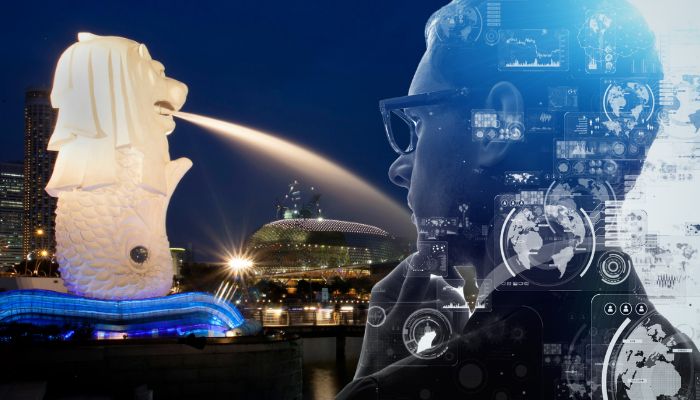
Singapore – Singapore has announced an update to its National AI Strategy, outlining refreshed priorities aimed at advancing artificial intelligence development and adoption across sectors while reinforcing the country’s ambition to use AI for the public good.
Speaking at the ATxSummit on 20 May 2026, Josephine Teo, Minister for Digital Development and Information (MDDI), unveiled the latest update to the strategy, which builds on the foundations of Singapore National AI Strategy 2.0.
NAIS 2.0 was launched by Lawrence Wong in December 2023, setting out Singapore’s vision to harness AI for the public good through 10 enablers. Since then, the government said the global AI landscape has evolved rapidly and Singapore has made progress across those areas.
To guide the next phase of development, the National AI Council, chaired by Wong, was established in February 2026 to provide strategic direction and coordinate the country’s AI agenda.
The updated strategy introduces 10 refreshed priorities aligned with the existing enablers, building on progress made since NAIS 2.0 while incorporating lessons learned and supporting the council’s expanded ambitions.
Three focus areas
The refreshed priorities are organised into three focus areas designed to guide the next stage of Singapore’s AI development.
The first focuses on deepening sectoral and public sector transformation. Under this area, Singapore will pursue national AI Missions in advanced manufacturing, financial services, connectivity and healthcare. The government also plans to embed AI more deeply across public agencies to accelerate transformation and improve services for citizens.
These initiatives will be supported by stronger applied AI research and engineering capabilities, the development of AI-bilingual talent with both technical and domain expertise, and governed access to relevant datasets.
The second focus area centres on mainstreaming AI adoption and strengthening workforce readiness. Authorities aim to support enterprises and government agencies in adopting AI tools for practical use cases while expanding workforce capabilities through training, job redesign and transition support.
Efforts will also include maintaining governance frameworks and strengthening societal trust in AI technologies.
The third focus area is aimed at strengthening Singapore’s position as an AI hub. Plans include expanding compute resources while improving efficiency in how AI systems are developed and deployed. Singapore also intends to deepen integration across its AI ecosystem domestically and internationally and contribute to global cooperation on AI.
Together, these initiatives are intended to position Singapore as a location where AI solutions can be developed, tested and scaled while supporting international collaboration.
Ten refreshed priorities
The update outlines ten priorities spanning industry, government, research, talent and infrastructure.
These include boosting sectoral transformation through national AI Missions while expanding AI adoption across industry, embedding AI more deeply across government operations, and strengthening capabilities across the spectrum of AI research.
The strategy also highlights the importance of nurturing AI-bilingual talent, building broad-based workforce capabilities, and improving ecosystem integration across Singapore’s AI community.
Other priorities include securing compute resources while promoting energy-efficient AI infrastructure, unlocking datasets with strong governance safeguards, strengthening AI governance and assurance frameworks, and reinforcing Singapore’s role in global AI collaboration.
Officials said the refreshed priorities aim to ensure that progress across the strategy’s enablers reinforces one another, allowing advancements in one area to support development in others.
“The 10 refreshed priorities reflect our assessment of what the next bound of AI development requires, and our commitment to adapt as the frontier moves. Our vision remains to shape AI for the Public Good, for Singapore and the World.”