

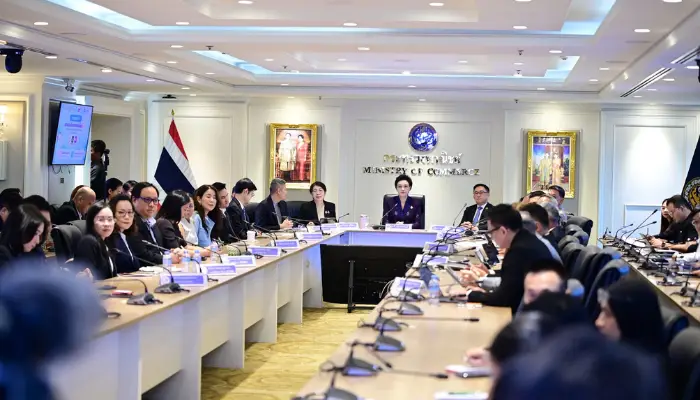
Thailand – Shopee, TikTok Shop, and Lazada have agreed to lower their mandatory seller fees in Thailand for six months. The Thailand Ministry of Commerce expects the cut to save businesses about US$57 million (around 1.93 billion baht).
The reduced rates will apply from 1 December 2026 to 31 May 2027, reverting to the levels in force on 1 January 2026. Actual rates will vary by platform, store type and product category.
Under the new schedule, Shopee will lower its fees from 8.03–19.26% to 8.03–13.91%. TikTok Shop will move from 13.38–21.94% to 11.24–17.66%, while Lazada will drop from 9.00–17.50% to 7.50–11.60%.
The agreement follows complaints from small and medium-sized enterprises (SMEs) about higher fees and changes to online trading rules. According to the ministry, those changes made it harder for sellers to plan costs and manage operations.
As a short-term measure, the Trade Competition Commission (TCC) has suspended the increase in GP fees for six months. Meanwhile, the Department of Internal Trade has coordinated talks between the ministry and the three platforms.
Wattanasak Suea-iam, Director-General of the Department of Internal Trade, said Deputy Prime Minister and Minister of Commerce Supajee Suthamphan had instructed the department to negotiate with the e-marketplaces. He added that all three platforms expressed willingness to cooperate and reduce their mandatory fees.
Supree Thongpetch, President of the Thai Federation of Small and Medium Enterprises, said the federation had received complaints from SMEs hit by the fee increase, many of whom could not adapt quickly. He described the reduction as a crucial starting point for balance in the e-commerce ecosystem.
Looking ahead, the ministry will use the six-month period to gather views from businesses, platforms, regulators and consumers. It will then review and develop a draft Digital Platform Economy Act, working with the Electronic Transactions Development Agency (ETDA), the TCC and the Department of Internal Trade.
Supajee said future regulations must consider pricing structures and fees, business operating principles, trade practices and relevant standards. She added that they should not impose unnecessary burdens on platform operators, but must include mechanisms that allow small businesses to compete.
“We don’t want any party to suffer, because everyone is in the same economic ecosystem. Platforms are a crucial mechanism for trade today. What the government wants is for all parties to grow together, for entrepreneurs to have fair competition, for platforms to conduct business appropriately, and for the public to receive maximum benefits through fair prices, clear regulations, and quality goods and services,” said Suthamphan.
“This is the beginning of our collaboration. In the long term, we will consider the data and feedback from the past six months to establish a comprehensive, transparent, and fair framework to ensure the sustainable growth of trade in Thailand’s digital economy and maximize benefits for the public,” continued Suthamphan.
Echoing that position, Poonpong Naiyanapakorn, Permanent Secretary of the Ministry of Commerce, called for joint action on regulation.
“We must work together to develop fair regulations so that SMEs can conduct business sustainably on digital platforms,” said Naiyanapakorn.
He added that the government does not want platforms to stop making profits. Instead, it aims to ease the burden on small businesses and the public while the energy crisis affects all parties.
For their part, representatives from the three platforms said they were ready to work with the government. Shopee said it would use technology to help businesses grow, Lazada backed talks on guidelines suited to the changing economic and technological context, and TikTok Shop said it would support businesses of all sizes.
Separately, the ministry is working with the Department of Community Development, the Department of Local Administration and the private sector to expand online sales channels for community and SME businesses.