
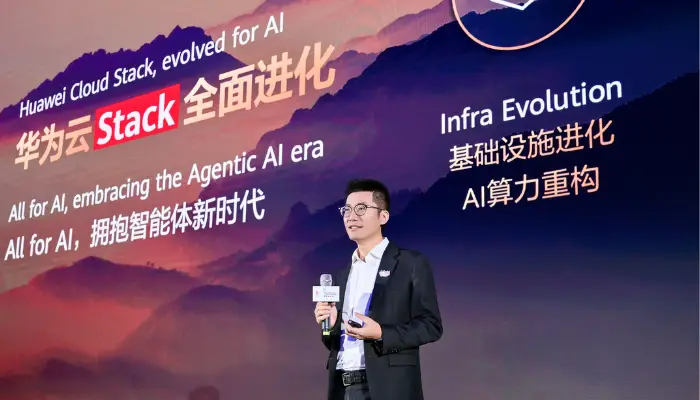
Shanghai, China – Huawei Cloud has outlined an expanded hybrid cloud strategy focused on supporting the development and deployment of AI agents, as enterprises explore new approaches to infrastructure, data and AI operations.
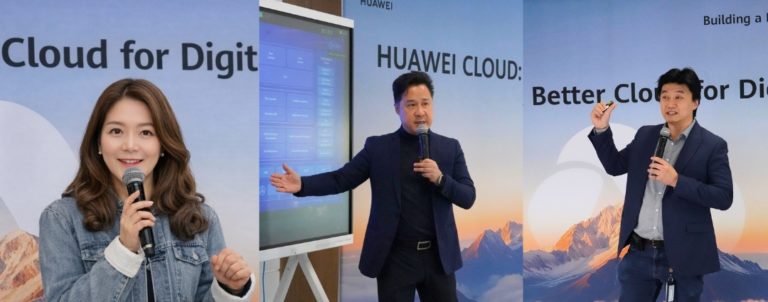
The strategy was presented at the Huawei Cloud Stack Summit, held during an event in Shanghai. The event focused on agentic hybrid cloud and included discussions on AI deployment and digital infrastructure across different industries.
Hybrid cloud architecture for AI agents
Antonony Gu, President of Huawei Hybrid Cloud, said the shift towards agentic AI is changing how enterprises approach business execution, resource provisioning and IT management.
According to Huawei, business execution is moving from human interaction with applications towards human-agent and agent-to-agent collaboration, with AI agents increasingly being used as digital workers.
The company also said resource provisioning is shifting from the separate assembly of infrastructure layers towards capabilities packaged around specific agent-driven tasks. At the same time, enterprises are increasingly required to manage AI compute, data and models alongside traditional IT resources.
In response, Huawei Cloud has introduced an AI agent-ready hybrid cloud architecture comprising four capabilities: elastic cloud infrastructure with unified general-purpose and AI compute; an AI-native capability hub connecting data, compute and tokens; an agent-native platform for developing and running AI agents; and intelligent operations and security covering the AI agent lifecycle.
“As AI agent adoption continues to accelerate over the next three to five years, a deterministic hybrid cloud architecture is a clear path forward for enterprises in the agentic world,” said Antonony Gu, President of Huawei Hybrid Cloud.
Infrastructure and data capabilities
Huawei Cloud Stack is also being developed across four areas: infrastructure, data, AI and its partner ecosystem.
The infrastructure component, described by Huawei as Agentic Infra, supports the company’s A5 SuperPoDs and technologies including NPU pooling and memory snapshots. Huawei said these technologies can increase compute utilisation from 30% to 70%.
The platform also includes an operations and management framework intended to provide visibility and governance for AI agents, alongside security measures covering infrastructure, AI models and agents.
For data management, Huawei Cloud Stack provides capabilities spanning the data lifecycle, including data management, delivery, use and circulation. Its offerings include a decoupled storage and compute architecture, AI DataLake for multimodal data management and DataArts for data-driven decision-making.
AI applications across industries
Huawei Cloud is also expanding its use of foundation models and industry-specific knowledge to support AI applications in production.
The company highlighted domain-specific models covering areas including vision-language processing, scientific computing and prediction, alongside OptVerse AI Solver for optimisation and decision-making.
Huawei Cloud Stack’s model training and inference capabilities are intended to support high-performance inference and the availability of tokens required for AI agent tasks.
The company is also working with partners and developers through an Industry AI Foundry, bringing together reference solutions in areas such as smart finance and smart government. Huawei said the initiative is intended to support the deployment of established AI use cases across enterprise environments.
Huawei Cloud Stack said it will continue investing in Agentic Infra, data and AI while working with partners to expand its ecosystem and support enterprises bringing AI applications into production.