
Malaysia – Malaysia needs to translate its growing digital infrastructure and computing capacity into artificial intelligence (AI) capabilities that deliver practical value across the economy, according to Minister of Communications Dato’ Seri Fahmi Fadzil.
“The distinction we must now make is between having digital infrastructure and being a place where AI is developed, deployed and applied. That means using AI to make our semiconductor and electronics industries more productive, strengthen advanced manufacturing and logistics, improve supply chains, transform healthcare, support agriculture and deliver better public services,” said Minister of Communications Dato’ Seri Fahmi Fadzil in his keynote address at a conference in Kuala Lumpur.
Fahmi said the country’s progress should be assessed through the economic value generated by AI rather than computing capacity alone. Under the Government’s National AI Action Plan 2026-2030, also known as AI Nation 2030, Malaysia is targeting an additional 0.8 to 1.2 percentage points of annual GDP growth, equivalent to approximately RM13 billion (USD $3.195 billion) to RM20 billion (USD $4.92 billion) a year, alongside 300,000 to 500,000 new AI-related jobs.
“Our progress should not be measured simply by computing capacity but by the economic value and opportunities that we create from it. This is the ambition behind the Government’s National AI Action Plan 2026-2030, or AI Nation 2030. We are targeting an additional 0.8 to 1.2 percentage points of annual GDP growth, equivalent to roughly RM13 billion to RM20 billion a year. We also aim to create 300,000 to 500,000 new AI-related jobs,” Fahmi continued.
The minister also highlighted the need to ensure that AI-driven growth creates opportunities for younger workers and contributes to employment.
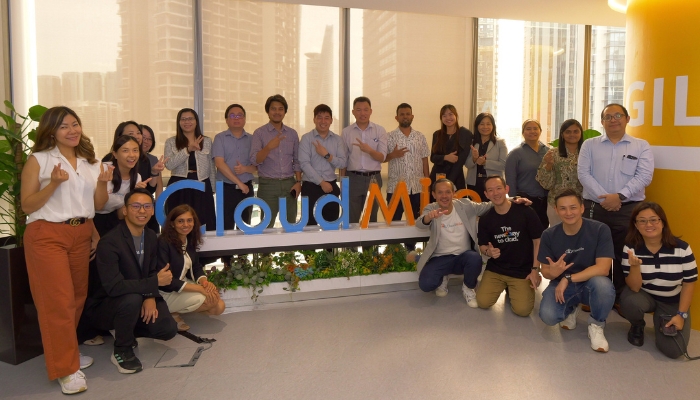
Fahmi welcomed Huawei Technologies (Malaysia) Sdn Bhd‘s support for the conference and its plans to develop 30,000 Malaysian AI talents and 200 local AI partners over the next three years through engagement, knowledge transfer and cloud and AI collaborations.
The conference also highlighted China’s development of intelligent technologies and their potential relevance to Malaysia and the wider region.
“In the first half of this year, China exported over 10,000 smart bionic robots to more than 90 countries and regions. China’s intelligent manufacturing is bringing unprecedented convenience and efficiency to a growing number of countries worldwide,” said His Excellency Ouyang Yujing, Ambassador Extraordinary and Plenipotentiary of the People’s Republic of China to Malaysia, in his speech.
Ouyang also pointed to growing cooperation between China and Malaysia in AI, data centre infrastructure and university-led research.
“As modern Chinese tech firms invest heavily in Malaysia’s AI sector and data centre infrastructure, and as the universities from both countries speed up cooperative innovation in cutting-edge fields like AI and advanced engineering, AI is rapidly emerging as the dynamic new growth engine for China-Malaysia cooperation,” His Excellency Yujing continued.
“Malaysia, within APAC, holds a unique position. Geographically, it sits at the crossroads of East and West, connected by world-class submarine cables. In terms of computing power, Johor has become one of the fastest-growing AI data centre hubs in the world,” said Terry He, President of Huawei Asia Pacific Region (Huawei APAC).
“On energy, Malaysia offers competitive and increasingly green power, partnering with major leaders generating their own energy for AI campuses. Malaysia is on track to host around two-thirds of ASEAN’s data centre capacity by 2035. With these advantages, we believe Malaysia is well positioned to be not only an infrastructure leader, but also a regional AI hub, empowering AI development across the region,” He continued.
“Looking ahead, Huawei will continue to contribute in three key areas. First, we will strengthen the foundation for intelligence. Together with local partners, we will build secure, resilient, and green digital infrastructure across connectivity, computing, cloud, storage, and green energy. Second, we will accelerate AI adoption across industries by bringing AI into key sectors including telecommunications, public services, finance, healthcare, education, and SMEs to improve productivity and create tangible value for society.
Third, we will build an open and trusted innovation ecosystem. We will connect global capabilities with local innovation, support Malaysian partners, developers, and startups, and further advance AI talent, responsible AI, cybersecurity, and secure digital infrastructure—helping take “Made by Malaysia” AI solutions to ASEAN and the world,” He added.
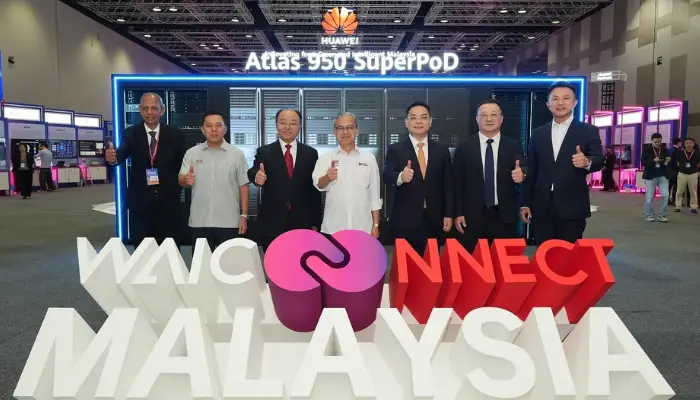
The conference comes as Malaysia moves towards applying its digital and computing infrastructure to AI use cases across industry, government and wider society. It also provided a platform for organisations from Malaysia, China and ASEAN to exchange approaches to AI development and explore potential collaboration around practical adoption, sustainability and responsible deployment.