
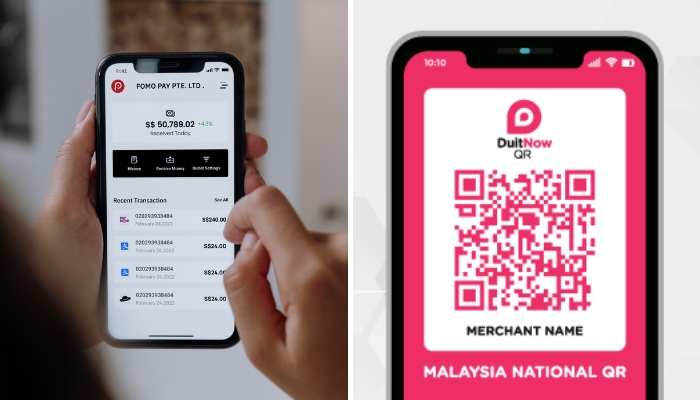
Singapore – Payment institution FOMO Pay has announced plans to launch DuitNow QR acceptance in Singapore, allowing Malaysian travellers and visitors to make payments using their existing banking and payment applications while merchants receive settlement in Singapore Dollars (SGD).
The rollout is scheduled ahead of the opening of the Johor Bahru–Singapore Rapid Transit System (RTS) Link in January 2027. The cross-border rail project is expected to carry up to 40,000 passengers daily and is anticipated to increase travel and consumer activity between Singapore and Malaysia.
According to FOMO Pay, the initiative is designed to help Singapore merchants accommodate growing visitor traffic from Malaysia. Through the service, Malaysian consumers will be able to pay in Malaysian Ringgit (MYR) using familiar local banking and payment apps, while merchants receive funds in SGD. The company said the arrangement removes the need for separate payment systems or manual handling of foreign currencies.
The company noted that as cross-border travel continues to rise, demand for seamless payment experiences is increasing, particularly across retail, dining, and lifestyle sectors. It added that smoother payment processes could contribute to greater consumer confidence and spending among regional travellers.
Commenting on the rollout, Rose Wang, Head of Digital Payments at FOMO Pay, said: “Cross-border commerce is no longer limited to large enterprises or international brands. Increasingly, everyday businesses are serving consumers who move frequently across markets. As travel and consumer movement across Southeast Asia becomes increasingly fluid, real-time payment rails like DuitNow are fast becoming part of the infrastructure powering everyday regional commerce. Enabling DuitNow QR acceptance in Singapore helps merchants better connect with Malaysian consumers in ways that feel natural to how they already transact in their daily lives.”
FOMO Pay said the launch forms part of its broader strategy to provide merchants with access to national instant payment systems across Asia through a unified multi-rail and multi-currency platform. The company said this approach is intended to support the growth of cross-border consumer spending and digital payment adoption across the region.