
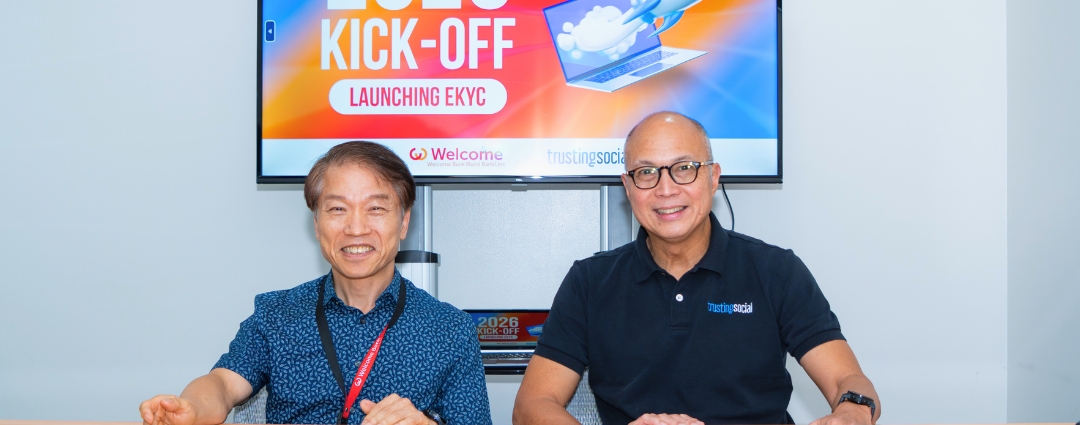
Manila, Philippines – Trusting Social Philippines and Welcome Bank (Rural Bank), Inc. have introduced a fully digital identity verification and electronic signing capability for the rural banking sector in the Philippines, marking what the companies describe as the first combined deployment of eKYC and eSignature functions in this segment of the market.
The integration is intended to simplify credit access, particularly for customers in provincial areas who have traditionally encountered procedural and logistical obstacles.
For new borrowers, including salaried employees seeking personal loans and households applying for vehicle or property financing, conventional lending processes have often involved a mix of online submissions and in-person requirements.
Applications initiated digitally typically required follow-up visits to branches, submission of physical documentation and handwritten signatures, resulting in processing times that could extend over several days or longer.
Through the integration of Trusting Social’s electronic identity verification tools with eMudhra’s digital signing platform, customers of Welcome Bank are now able to complete loan applications through a fully online process using a mobile device. The system enables applicants to verify their identity and execute required documents electronically without attending a branch.
“Every delay in a loan application is a lost chance for a business to grow or a family to achieve a milestone,” Johnny Escaler, CEO of Trusting Social Philippines, stated.
“By streamlining the journey from identity to signature, we are helping Welcome Bank put power back into the hands of the borrower. We win when we bridge the gap between consumers and the life-changing opportunities they deserve.”
The onboarding procedure does not require scheduled video interviews with bank representatives. Instead, identity checks are conducted through automated processes available at any time, allowing users to validate credentials and sign agreements without waiting for manual review sessions.
The verification flow relies on AI-based technologies to authenticate government-issued identification and perform liveness checks using facial recognition. Once validated, applicants proceed to an encrypted digital signing stage designed to ensure document integrity and legal enforceability.
“Our real goal is to earn the trust and love of the families we serve by being a bridge to their success,” Suk Sub Shim, president of Welcome Bank (Rural Bank), Inc., commented.
“We’re cutting out the paperwork because a dream is too important to keep waiting. This is just the beginning of how we’re working to bring better, simpler banking to everyone.”
Additionally, the platform also incorporates safeguards aimed at addressing emerging fraud risks, including synthetic identity manipulation and phishing-related threats.
The implementation aligns with the requirements of the Anti-Financial Account Scamming Act (AFASA), which obliges financial institutions to strengthen real-time monitoring and preventive controls against suspicious account activity. Bangko Sentral ng Pilipinas (BSP) has set 30 June 2026 as the deadline for banks to implement automated Fraud Management Systems in accordance with AFASA.
By deploying automated identity verification and behavioural biometric monitoring ahead of this timetable, Welcome Bank is positioning its compliance framework in advance of the national requirement.