

Singapore – Shoppers in Southeast Asia (SEA) are comparing more brands over longer periods before buying, according to Criteo’s report, which draws on Q4 2025 commerce data. The findings also show that retail revenue in the region rose 21% year-on-year.
Site traffic stayed broadly flat, yet conversion rates climbed 20%. Sales rose 20% as a result, which suggests the extra growth came from the same number of visitors buying more often rather than from new footfall.
Shoppers also took their time getting there. During 10-12 November, around Singles’ Day, SEA buyers needed an average of 22 days from first viewing a product to purchasing it.
Thailand recorded the longest gap at 29 days, followed by Malaysia at 27 days and Indonesia at 26 days. By comparison, shoppers in Europe took 18 days and those in the US 17 days over the Black Friday weekend.
Singapore showed the shift most clearly. Traffic fell 15%, but conversion rose 39%, which lifted Q4 sales by 18%.
Malaysia was the region’s fastest-growing market, with both conversion and revenue up 34%. The US and Europe moved differently: US conversion fell 10% despite a 3% rise in visitors, while Europe’s conversion slipped 2% even as visitors rose 6%.
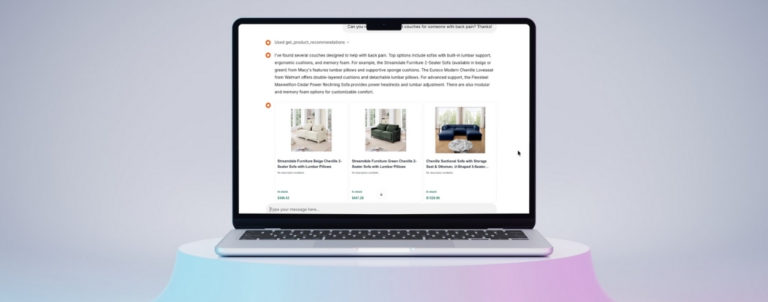
The report also points to a growing number of shoppers who ask AI assistants for recommendations before they visit a retailer. “Southeast Asian shoppers have a sale to look forward to almost every month, so they’ve learned that a good price will always come around again,” said Sukesh Singh, Managing Director of Southeast Asia, Criteo. “That frees them to take their time choosing which brand to buy, and more of that research now starts with a question to an AI assistant.”
Browsing behaviour backs that up. Before buying around Singles’ Day, SEA shoppers had viewed an average of 3.8 brands on a single retailer in the preceding month, nearly double the figure of 2 recorded in both the US and Europe.
Across retailers, the average rose to 5.8 brands. Marketplaces appear to play a central role, since online revenue at SEA marketplace and department store sites grew 41% in Q4.
Online mass-market retailers also performed strongly, with revenue up 36%. Fashion retailers moved the other way, with online revenue down 21%.
Research from another Criteo study adds further context. It found that most Singapore shoppers are open to discovering new products when search results are relevant and timely, while 44% cite seeing the right ad at the right moment as a top reason to buy.
Singles’ Day was the region’s biggest shopping day of Q4. Sales rose 132%, order value 212% and traffic 73% against baseline, ahead of 10.10 and 12.12.
Malaysia felt the surge most, with Singles’ Day sales up 155%, the highest in SEA. Singapore, meanwhile, posted the biggest jump in order value at 299%.
The three double days, on average, outperformed Western retail moments. They lifted sales by 89%, order value by 146% and product page views by 49%.
Black Friday delivered smaller gains of 38%, 44% and 26% respectively, while Cyber Monday recorded 35%, 34% and 18%.
The season also begins earlier than many retailers assume. Sales on 9.9 rose 84%, outpacing both 10.10 (+51%) and Black Friday.
Shoppers do not always wait for the sale itself, either. The eve of each double day ranked as the second-biggest sales day of its month, with 11.10 (+76%) and 12.11 (+62%) both outselling Black Friday.
Thailand showed how spread out the season has become. Sales on 9.9 (+115%) and 12.12 (+102%) came close to the uplift on Singles’ Day (+129%).
Category data pointed to gifting and home upgrades as the main drivers. Health and Beauty led on 11.11, with sales up 268%.
On 12.12, gifts and home entertainment took over, with cosmetic sets up 467%, TVs up 430% and karaoke systems up 406%.
Singles’ Day also drew the most first-time buyers. Their numbers reached 2.3 times baseline levels (+130%), ahead of 12.12 (+79%), Black Friday (+49%), 10.10 (+33%) and Cyber Monday (+25%).
New buyers grew faster than repeat buyers on the day, at 130% against 106%. Across Q4, first-time buyers made up around 40% of all purchasers.