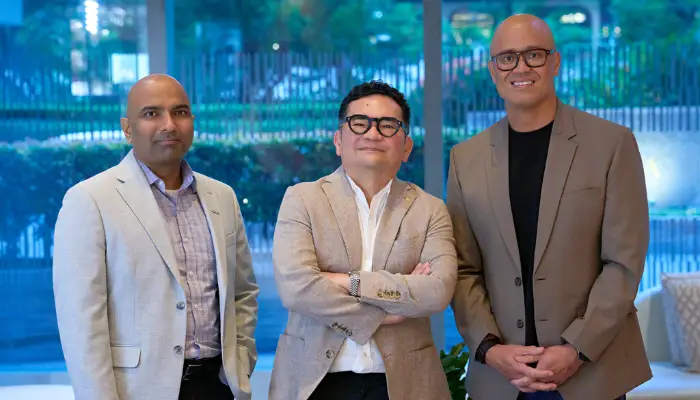

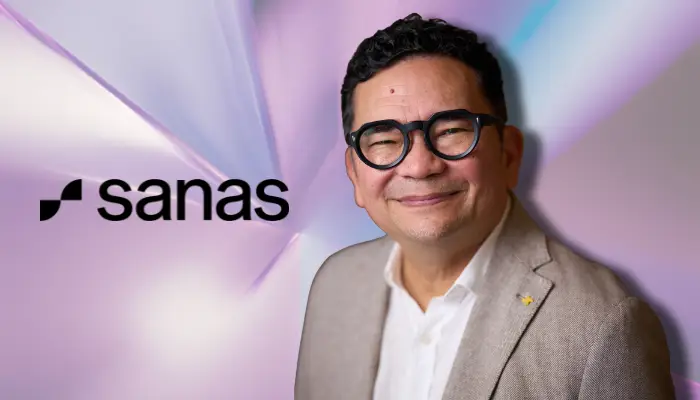
Jack Madrid built his last four years at the helm of the IT & Business Process Association of the Philippines (IBPAP) around one question: how does the country keep moving up the value chain? Increasingly, he says, the answer has been AI. That question is now taking him to speech AI company Sanas, where he steps in as Ambassador, Philippines, alongside Christopher Venturina as Director of Business Development.
For Madrid, the move isn’t a departure from his IBPAP work so much as an extension of it. “Sanas represents a very practical example of what I believe the next chapter should look like: technology augmenting people rather than simply replacing them,” he says.
The Philippines, he argues, has already built an extraordinary global services industry on the strength of its people — what it needs now is to arm that talent with better tools. “That is very consistent with what I have been advocating for at IBPAP, so the Sanas role feels less like a change in direction and more like a continuation of that work from a different vantage point.”
A different kind of competitive advantage
Madrid’s thesis for why the Philippines can lead the next era of global customer experience rests on a distinction between scale and value. The industry — some 1.9 million Digital Filipino Workers strong, according to IBPAP figures compiled under his leadership, and worth more than US$40 billion in annual revenue — has long been recognised for its size. Madrid wants it recognised for something else.
Filipino professionals, he says, have built a global reputation on empathy, cultural adaptability, and the ability to navigate complex customer interactions — human capabilities he believes become more valuable, not less, as AI absorbs routine tasks.
“The opportunity is to combine that human advantage with AI at scale,” Madrid explains. “I believe the winning model is not human versus AI. It is a highly capable Filipino professional equipped with AI.” Scale that across the entire industry, he suggests, and the country’s story shifts from being known for the size of its workforce to being recognised for its capability.
Redefining upskilling around judgment, not just tools
Madrid is careful to draw a line between what he calls AI fluency and technical AI expertise — and he’s blunt that the industry sometimes gets this wrong. “We sometimes make the mistake of thinking everyone needs to become an AI engineer. They don’t,” he says. What workers actually need, in his view, is a working understanding of what these tools can do and the judgment to know when to rely on them.
Paradoxically, that shift raises the premium on distinctly human skills — critical thinking, empathy, problem-solving, domain knowledge — rather than diminishing them. Madrid frames the challenge as one of moving “from task proficiency to capability,” where AI absorbs repetitive work and people take on more that requires context and decision-making. He’s also clear that responsibility doesn’t sit with workers alone: “Upskilling cannot be placed entirely on the employee. Companies have a responsibility to provide their people with the tools, training and opportunities to make that transition.”
What Sanas is building toward in the Philippines
On the business side, Madrid outlines a roadmap built around three priorities. The first is working directly with enterprise leaders to identify concrete problems that real-time speech AI can solve — from improving communication clarity and reducing background noise to overcoming language barriers and extracting better intelligence from customer conversations.
The second is partnerships: given how interconnected the Philippine technology and IT-BPM ecosystem already is, Madrid sees more value in working alongside existing platforms and service providers than in positioning Sanas as a standalone solution.
The third priority is proof. “The conversation around AI has moved beyond whether the technology is impressive,” he says. “Enterprises increasingly want to know: Does it improve customer experience? Does it improve productivity? Does it help our people perform better? That is where I believe Sanas can make the strongest case.”
The appointments of Madrid and Venturina — effective October 11 — mark a further expansion of Sanas’ Philippine operations, as the company deepens ties with enterprises, BPO providers, and technology partners in one of the world’s largest customer experience markets. Sanas currently works with more than 200 enterprises globally and processes millions of live voice interactions daily.
Moving past the AI talk
Asked what’s actually holding businesses back from implementation, Madrid doesn’t point to the technology itself. “I don’t think the biggest obstacle is technology anymore. It is knowing where to start,” he says. Two years of strategic-level AI discussion, he notes, have left the term so broad that companies often struggle to translate ambition into a specific business case.
His advice is to reverse the usual approach: “Stop beginning with AI and start with the problem.” Where are customers hitting friction? Where are employees losing time? Where can improvement actually be measured? It’s part of what draws him to speech AI specifically — it’s tangible enough to apply to a real interaction, measure, and evaluate.
That same logic extends to his advice for leaders unsure how to begin. Rather than chasing a sweeping AI strategy — which he warns “can quickly become a very expensive PowerPoint presentation” — Madrid recommends starting narrow: one problem, one workflow, one measurable outcome. Establish a baseline, run a pilot, and listen closely to the employees and customers actually using it before deciding whether to scale.
He’s also insistent that frontline staff be brought in early, not after the fact. “The people doing the work usually understand the friction better than anyone else, and AI adoption will be much more successful if employees see the technology as something that helps them perform rather than something being imposed on them.”
It’s a philosophy that mirrors the thesis behind his move to Sanas: pair Filipino talent with the right tools, prove the value in concrete terms, and let that evidence — not the hype cycle — drive the next phase of the industry’s growth.